Author: admin

  • How to Identify Nucleophile vs Electrophile (Summary & Detailed)

    How to Identify Nucleophile vs Electrophile (Summary & Detailed)

    Ever struggle with how to identify if a group is a nucleophile vs. electrophile?
    If you are in a rush and don’t care about learning chemistry (bruh), the first sections got you. I recommend you try to truly understand the concept as it’s arguably the most important skill in organic chemistry.

    1. Nucleophiles (nucleus-loving) are neutral or negatively charged species that donate high energy electrons to form new bonds with electrophiles (electron-loving), which are neutral or positively charged species that can easily accept electrons
    2. Nucleophiles are Lewis bases (e.g. NH3); electrophiles are acids (e.g. H+, BF3)
    3. The chemical bonding occurs between the highest occupied (HOMO) of the nucleophile and the lowest unoccupied molecular orbital (LUMO) of the electrophile
    4. Single atoms, sigma-bonds and pi-bonds can be nucleophilic or electrophilic – and the same molecule can contain both (one part nucleophilic, one part electrophilic)
    5. Nucleophiles and electrophiles are complementary, they react with each other. You will never see a reaction where two groups react with each other as nucleophiles!

    Level 0: Chemical bonds are like … financial transactions?

    If you’re a student, you’re likely broke (you are in need of, and easily accept money => you are electrophilic).
    You go to your parents to borrow some money for a dinner (they can donate money => they are nucleophilic).
    By getting money and the food, you get happier (you are energetically stable). Your parents are also stoked they can spend some time with their favorite child (they are also energetically stabilized).

    electrophile and nucleophile curved arrow direction

    This explains how we draw curly arrows, representing electron movement: There are no electrons at the electrophile (it is broke). Instead, the electron donation arrow starts at the nucleophile and points to the acceptor, the electrophile.

    Level 1: Nucleophile vs electrophile

    You have two options on how to remember which is which:
    1. Not recommended: You force-memorize some analogy like above with no brain cell activation, setting you up for nice failures in organic chemistry exams

    NucleophileElectrophileP*d*phile
    What it hasHas more than
    enough electrons
    Has some sort of
    positive polarization
    Problems, chocolate
    & puppies
    What it wantsWants to share
    its electrons

    (likes positive charges)
    Wants to accept
    other electrons

    (likes electrons)
    Kids
    ChargeNeutral or negativeNeutral or positivePrison sentence
    OrbitalsHigh-energy occupied Low-energy unoccupiedOrbits around kids
    and playground
    Acid or baseLewis baseLewis acidPuts them in his base(ment)

    The electrons that a nucleophile donates form the new bond with the electrophile. A simple example is the protonation of water. Which is the nucleophile vs electrophile?

    water as an nucleophile

    Reviewing the more complex mechanism for the hydration of formaldehyde, you will realize that:
    1. Specific atoms or also bonds can have nucleophilic or electrophilic behavior
    For example, in the first step, the carbonyl pi-bond is the electrophile. In the second step, the proton H+ is the electrophile.

    2. For reactions with multiple mechanistic steps, there can be many different nucleophiles and electrophiles
    For example, after the first addition to the carbonyl, the previously nucleophilic water molecule turns into a cationic intermediate which is now electrophilic (which is why it reacts with another nucleophilic water in a deprotonation)

    nucleophile vs electrophile in hydration of aldehydes

    Tired of serious chemistry?
    Take a break with “Periodic Tales – The Freshman Mole”, a satirical novel that’s the opposite of educational.

    Dedicated to every chemistry and STEM student who asked: “Why did no one warn me?”

    Level 2: Types of nucleophiles

    How do we identify electron donors and electron acceptors? There are three categories for both. It’s easier for nucleophiles, so let’s start there.

    types of nucleophiles

    1A) Lone electron pairs, e.g., water H2O or ammonia NH3 (neutral nucleophile)
    Reaction example: Protonation of neutral bases
    1B) Negative charges (also electron pairs), e.g., hydroxide OH or cyanide CN anions
    Reaction example: Basic hydrolysis of an ester
    2) Bonding pi-orbitals, most notably C=C double bonds, e.g., alkene or aromatic ring
    Reaction example: Bromination of alkenes, electrophilic aromatic substitution
    3) Bonding sigma-orbitals with highly electropositive atoms, e.g., methyllithium Li-CH3
    Reaction example: Carbonyl reduction with LiAlH4, organometallics

    This should make sense. These are the only “ways” you will ever find electrons in a molecule. Either as an unbound electron, in a pi-bond, or in a sigma-bond. This corresponds to the idea of highest occupied molecular orbitals (see below).

    Level 2: Types of electrophiles

    What about electrophiles? Two categories are similar, and one is different.

    Like nucleophiles, we have pi- and sigma-bonds as acceptors (as they have empty orbitals that can be filled with electrons). However, instead of electron pairs for nucleophiles, we need to look for empty orbitals on single atoms. Think of the empty orbitals like filled purses

    types of electrophiles

    1A) Positive charges representing an empty p orbitals, e.g., proton H+
    Reaction example: Protonation of any base
    1B) Neutral molecule with empty p orbital, e.g., Lewis acids like BF3 or AlCl3
    Reaction example: Friedel-Crafts acylation
    2) Pi-bond next to electronegative/ stabilized system, e.g., carbonyl
    Reaction example: Aldehyde hydration, conjugate addition
    3) Sigma-bond to electronegative atom, e.g., methyl iodide CH3-I
    Reaction example: SN2 reaction, bromination of alkenes

    For both of these categories, I always represented the nucleophile as “Nu-” and electrophile as “E+”. But any combination of these categories works – e.g., an nucleophilic pi-bond can attack an electrophilic pi-bond!

    If you know a fair share of reactions, try to think about additional examples for each!

    Level 3: Orbitals

    Let’s get to the bottom of this (without me writing another text book on orbitals).

    Point #2 is critical: energy levels of the nucleophile and electrophile orbitals.
    The strongest stabilization comes from interacting orbitals with similar energies.

    molecular orbital energy diagram for electrophiles and nucleophiles

    All molecules have many low-energy, unfilled orbitals and high-energy, empty orbitals (illustrative grey orbitals). We can ignore all because the energy differences between them are too large. The most relevant interaction will be the one between the lowest-energy unoccupied (LUMO) and highest-energy occupied molecular orbital (HOMO).

    The higher-energy a HOMO is, the easier it can donate electrons into LUMOs.
    The lower-energy a LUMO is, the easier it can accept electrons.

    This picture explains the types of electrophiles
    1A + B) Empty orbitals can be LUMOs (neutral or positively charged atom)
    2) Pi-bonds always have an empty antibonding pi-star MO which can be a LUMO
    3) Similarly, sigma-bonds have an antibonding sigma-star MO which can be LUMO

    … and types of nucleophiles:
    1A +B) Lone pairs can be HOMOs (neutral or negatively neutral charged atom)
    2) Pi-bonds always have a filled bonding pi MO which can be a HOMO
    3) Similarly, sigma-bonds have a filled bonding sigma MO which can be a LUMO

    Recap: Nucleophile vs electrophile

    By now you should be able to identify a nucleophile vs electrophile, and know the different types that exist. As an exercise, review reactions you already know or that I discuss on my channel, or functional groups (e.g., protecting groups) to apply your learnings.

    There are more nuances and explanations which are not digestible in a single post. So, future posts will explain things like:
    – What are the most common nucleophiles and electrophiles?
    – How does conjugation to electron-donating or -withdrawing groups influence nucleophilicity or electrophilicity?
  • TBS Protecting Group: TBS Protection & Deprotection

    TBS Protecting Group: TBS Protection & Deprotection

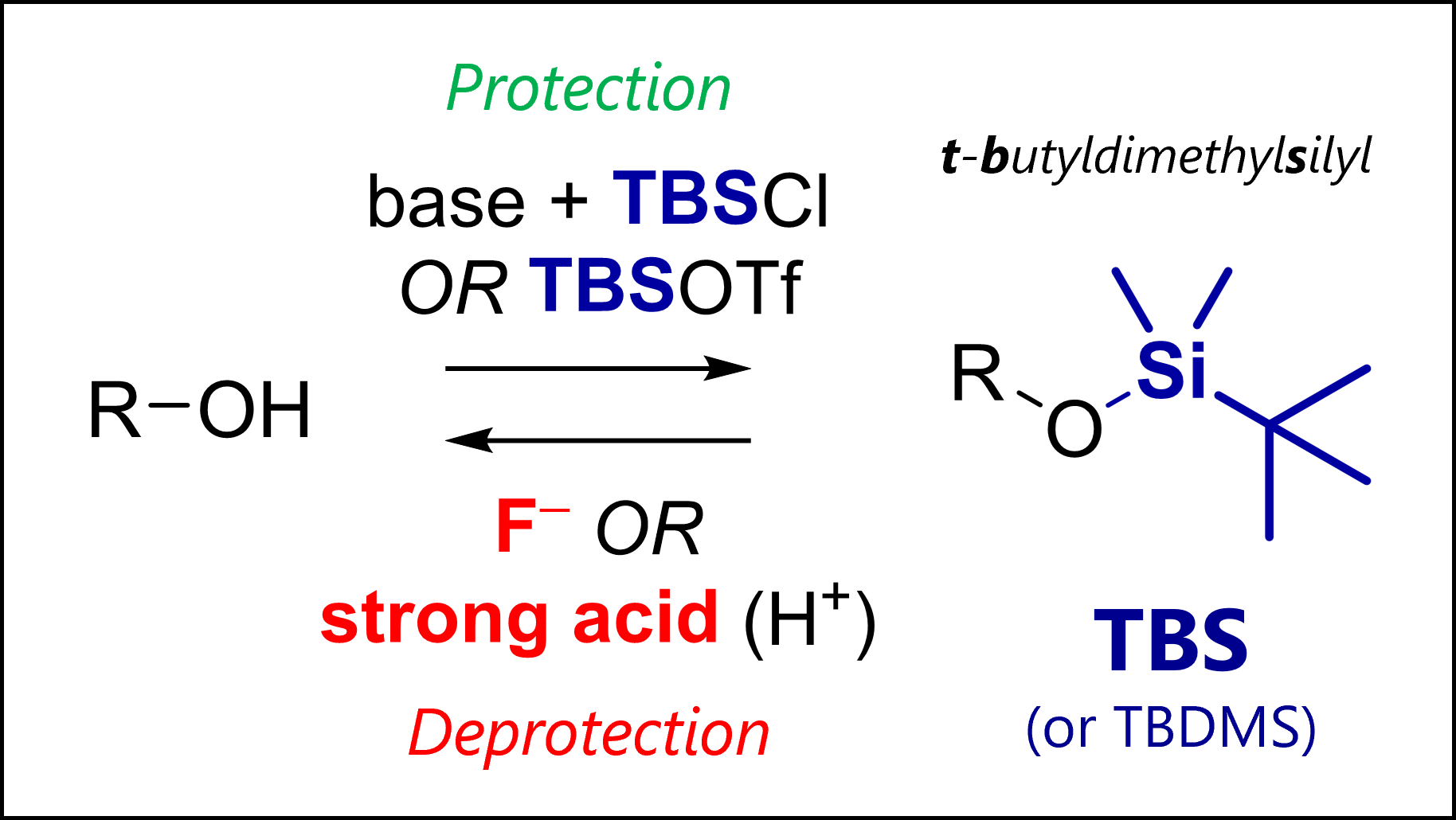
    Conditions for protection and deprotection of the TBS protecting group (TBSOTf or TBSCl)

    This bulky silyl PG is resilient, allowing for selective/ orthogonal deprotection of similar groups like TMS.

    🫡 Here’s what you’ll learn:

    👀 Left: 3D model of TBS. Can you differentiate the methyl from the tBu groups?

    What is the TBS Protecting Group?

    TBS or TBDMS is short for tertbutyldimethylsilyl, a protecting group for alcohols.
    TBS was introduced by the legendary E. J. Corey in 1972 [1] as an evolution to simpler silyl ethers which had already been known. Note this was right around the time of Fmoc discovery, and relatively late in the history of organic synthesis.

    The research already covered protection and deprotection conditions still used today. It is one of the most cited JACS publications ever. A decade later, Corey also introduced triflate reagents for silyl ether synthesis [2].

    TBS Protection Mechanism

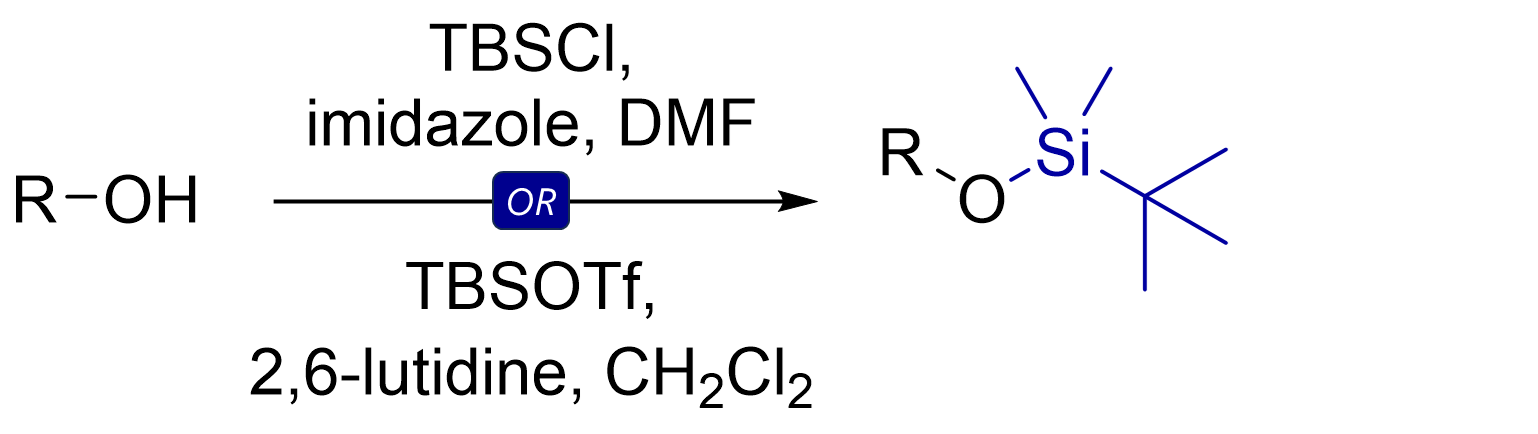
    TBS protection conditions (TBSCl, imidazole or TBSOTf, lutidine)

    The most common TBS protection conditions are TBS-Cl (forms hygroscopic white crystals) in DMF with imidazole or DMAP.
    Corey encountered challenges using TBS-Cl for protection of tertiary or hindered secondary alcohols. Use of TBS-OTf triflate (with 2,6-lutidine as base in solvents like dichloromethane) proved more potent for such cases.

    TBS protection mechanism with imidazole catalysis

    The classic mechanism contains generation of an imidazolium intermediate which acts as a silyl transfer reagent for the actual silylation.
    The steps might look counterintuitive. Silicon, in contrast to carbon, can have five bonds at once! Both silylations likely proceed through associative substitutions with pentavalent silicon intermediates. However, you’re likely also fine drawing a concerted step.

    Tired of serious chemistry?
    Take a break with “Periodic Tales – The Freshman Mole”, a satirical novel that’s the opposite of educational.

    Dedicated to every chemistry and STEM student who asked: “Why did no one warn me?”

    TBS Deprotection Mechanisms

    There are three types of deprotection mechanisms for TBS and silyl ethers in general.

    Acidic deprotection mechanism of TBS silyl ethers

    1. Acidic hydrolysis works through protonation of the protected oxygen atom, followed by associate hydrolysis with a pentavalent silicon intermediate.

    Fluoride mediated deprotection mechanism of TBS silyl ethers

    2. Fluoride-mediated deprotection is based on nucleophilic attack onto silicon, giving a pentacoordinate siliconate intermediate that can release our deprotected product. This is like the imidazole catalysis we’ve seen during TBS protection.

    The thermodynamic driving force is the formation of the exceptionally strong Si-F bond (>30 kcal/mol stronger than Si-O) bond. For fluoride-mediated deprotection, TBAF (tetrabutylammonium fluoride) is the archetypical fluoride source. However, other sources like HF or amine-HF complexes are also commonly used.

    3. Basic hydrolysis can theoretically also occur with TBS ethers, even though have high stability towards bases. However, at very forcing basic conditions, TBS ethers can hydrolyse (e.g., excess LiOH, dioxane, EtOH, H2O, 90 °C).
    The mechanism is also based on nucleophilic addition to silicon, followed by Si-O bond breaking.

    Silyl ether protecting group Stability

    Many different variants of silyl ethers exist. Despite their overall similarity, they can behave quasi-orthogonal due to different lability. Below, you can see the relative stability towards acidic and basic aqueous hydrolysis.

    Silyl ether protecting groupStability to acid Stability to base
    TMS (trimethylsilyl)11
    TES (triethylsilyl)~60~10-100
    TBS (tertbutyldimethylsilyl)~20’000~20’000 (likely higher
    as basic stability > acidic)
    TIPS (triisopropylsilyl)~700’000~100’000
    Stability data from [3]

    As you can see, bigger silyl ethers are more stable than smaller ones. This stability directly shows – TBDMS ethers are stable to chromatography and survive various reaction conditions which smaller ethers do not. With different labilities, chemists can deprotect TMS or TES ethers in presence of TBS protecting groups (more below).

    Selective Deprotections of silyl ethers

    So, we have mentioned that selective deprotection of silyl ethers might be possible. The first category of reactions follows the steric stability we laid out above. Let’s look at some examples [4].

    Selective deprotection of TBS over TIPS

    Pyridinium p-toluene sulfonate (PPTS) in protic solvents like MeOH is the mildest system for deprotection of TBS ethers. In this example, you can see that the conditions are controlled enough so that the bulkier TIPS group does not fall off. The same would go for TBDPS (tert-butyldiphenylsilyl).

    SEM group is relatively acid resistant

    This next example is sneaky. Don’t be fooled by seeing “TMS” and thinking it will immediately be less stable than TBS! Upon close inspection, we realize that this is actually a alkyl silyl group, part of the so-called SEM protecting group. It can be removed through fluoride anions or more forcing acidic conditions.

    Welcome to chemistry, it’s sometimes random

    The second category of selective reactions does not follow any obvious rules. It’s really experimental randomness. A commonly cited example is from the synthesis of zaragozic acid C [5].

    TBS deprotection en route to Zaragozic acid C

    During this effort, it was possible to differentiate between two very similar TBS protecting groups. The use of dichloroacetic acid in MeOH was mild enough to selectively (90% yield) cleave only one of the TBS groups.

    That same synthesis actually also nicely demonstrated the concept of selective protection based on steric hindrance. After full consumption and protection of the primary alcohol with TBS-Cl, the chemists threw in TMS-Cl to protect the tertiary hydroxyl group as well.

    Selective protection of primary alcohol over tertiary alcohol

    There’s a recent example (2024) of TBS randomness [6]. In the last synthetic steps towards (+)-heilonine, the authors performed a Clemmensen reduction with Zn in HCl to reduce the ketone. It would have been nice if this one-two punch would have directly delivered the natural product. However, for no apparent reason, only one of the two TBS groups fell off. So, a separate deprotection step with TfOH was required.

    Surprising TBS removal with Lewis acids (Clemmensen reduction)

    That’s it for TBS. Learn more about other protecting groups, or watch my educational videos for advanced science content!

    TBS Protection experimental procedure [7]

    “To a solution of the diol (57.48 g, 0.354 mol) in DMF (354 mL) were added imidazole (96.52 g, 1.418 mol) and TBSCl (160.27 g, 1.063 mol) at rt. After stirring at 50 °C for 17h. H2O was added and the mixture was extracted with Et2O. The organic layer was washed with brine, dried over MgSO4, and evaporated in vacuo. The residue was purified by flash column chromatography (SiO2; n-hexane:EtOAc = 10:1) to give the diTBS ether (138.48 g, 100%).”

    TBS deprotection experimental procedure [7]

    “To a solution of the alcohol (45.2 g) in THF (350 mL) was added TBAF (1.0 M in THF, 184 mL, 0.184 mol) at rt. After stirring at rt for 18 h, the mixture was concentrated in vacuo. The residue was purified by flash column chromatography (SiO2; n-hexane:EtOAc = 4:6→EtOAc) to give diol (29.1 g, 97% yield, 2 steps).”

    TBDMS Protecting Group References

  • SN2 Reaction Explanation & Mechanism

    SN2 Reaction Explanation & Mechanism

    Do you struggle to comprehend the SN2 mechanism, or the difference between SN2 vs SN1? You are not alone! All of us need models and practice to understand what the molecules look like in their 3D structure. On my channel, you can find some more visual explanations and animations that might help.

    SN2 Mechanism: it takes two to tango

    Our first model reaction is the nucleophilic substitution of 2-bromobutane with the phenolate anion, also called a Williamson ether synthesis.

    chiral electrophile for SN2 (bimolecular nucleophilic substitution)

    2-Bromobutane is chiral as one of the carbons has four different substituents. We are looking at the (R)-enantiomer here – this will be important for the stereospecificity of the reaction. Electrophiles provide the LUMO for reactions, in this case the antibonding sigma star orbital between carbon and our leaving group. Note that bromide and iodide are particularly potent leaving groups due to high acidity of conjugate acids but also weak bonds with carbon. This is due to weak overlap of atomic orbitals, resulting in a low-energy sigma star that is accessible to our nucleophile, phenolate.

    SN2 highest occupied molecular orbital

    This electron-rich anion is completely planar due to conjugation of one of the oxygen electron pairs with the aromatic ring. Its HOMO is localized on the oxygen as you would expect – but we can also nicely see resonance with delocalization across the pi-system.

    SN2 Transition state

    To ensure decent orbital overlap, the substitution proceeds via back-side attack. Because the nucleophile needs to get pretty close to the already tetrahedral carbon, steric factors are more important for the SN2 reaction compared to SN1.

    SN2 transition state

    The SN2 mechanism proceeds in one concerted step with both electrophile and nucleophile present in the transition state – that’s why we call it 2, for bimolecular. The carbon-bromine bond is partially broken, and the carbon-oxygen bond partially formed. Remember that is just a transient energy maximum and not a real intermediate, carbons are never actually five-coordinate!

    After the transition state, the product moves to a more comfortable conformation but importantly, features the inverted stereochemistry due to back side attack. This changes the (S) enantiomer in the starting material to the (R) enantiomer product. As a good leaving group, the bromide anion enjoys its solitude and buzzes off.

    Tired of serious chemistry?
    Take a break with “Periodic Tales – The Freshman Mole”, a satirical novel that’s the opposite of educational.

    Dedicated to every chemistry and STEM student who asked: “Why did no one warn me?”

    Steric effects in SN2 substitutions

    steric hindrance in SN2 reactions

    Due to the five-coordinate transition state, more sterically hindered substrates react much slower or not at all. While it’s not intuitive on paper, the model nicely visualizes that surrounding substituents can block the nucleophiles back side attack. There’s simply too much unwanted repulsion. Instead, depending on reaction conditions like solvent polarity, we would see more step-wise SN1.

    Intramolecular SN2 reaction Mechanism

    Let’s look at a slightly more advanced example. I’m TotalSynthesis, so I just had to take a cute natural product that was isolated from random tropical algae in Brazil. As fate wanted it, this also has a secondary alkyl bromide, so it fits perfectly.

    aldingenin C, a natural product

    We’re interested in this epoxide opening step as it showcases a common question on diastereoselectivity. The reaction is intramolecular but is pretty similar to a SN2-type reaction. Given our fixed starting configuration, the side chain and the nucleophilic alkoxide hover on the bottom side of the ring.

    intramolecular SN2 epoxide opening

    As you can see, the nucleophile has a perfect position for the backside attack, leading to the 1,2-anti product. The leaving group is now much worse than bromide, but relieving the strain energy present in the epoxide drives the reaction forward.

    two potential products

    Is there another potential substitution? Indeed, the other epoxide carbon is also an electrophile. However, the methyl group at this position adds some steric hindrance. Given the quaternary center, this substitution could also proceed stepwise or “asynchronous”, with C-O bond breaking being more advanced prior to addition.

    Taking the longer approach forms a 7-membered ring. Compared to the six-member ring on the right, it’s not as rapidly formed or as stable – but the pathway is still significant with 19% yield.

    After six additional reactions, a surprising twist showed that the original proposal was incorrect. It turned out this unique natural product never existed to begin with! Instead, it was a mis-assigned, already known molecule, which is even a bit cooler given it includes two bromides and even a chloride. Well, it happens to the best of us.

    I’m looking forward to explaining simple, beginner-level content in addition to my other educational videos. Let me know if this helped you!

  • Fmoc Protecting Group: Fmoc Protection & Deprotection Mechanism

    Fmoc Protecting Group: Fmoc Protection & Deprotection Mechanism

    Conditions for protection and deprotection of the Fmoc protecting group (fluroenylmethoxycarbonyl)

    This group is similar to other carbamates (Boc, Cbz) despite being orthogonal. ❓ But there’s more – have you ever heard of Sulfmoc or Bsmoc?

    What is the Fmoc Protecting Group?

    Fmoc is a fluorenylmethoxycarbonyl group that forms carbamates with amines. However, as a common theme in protecting groups, alcohols and other nucleophiles can also be protected.

    Fmoc was introduced by Carpino in 1972 [1]. At that time, few base-sensitive amine protective groups were known. Chemists obviously already used protecting groups, but they were not as straight-forward. For example, the tosylethyloxycarbonyl group (base-labile with KOH/NaOEt) gave the stable carbamate salt which required a second step for decarboxylation.

    Fmoc Protection Mechanism

    The classic Fmoc protection is with Fmoc-Cl under Schotten-Baumann conditions (e.g. NaHCO3/dioxane/H2O or NaHCO3/DMF), or with anhydrous conditions (e.g. pyridine/CH2Cl2).

    If you have seen more than one protecting group, this will not surprise you:
    The mechanism is attack of the nucleophilic amine to the highly reactive 9-fluorenylmethyl chloroformate. As chloride is the leaving group, the reaction liberates HCl which is neutralized by the base.

    Fmoc-Cl can be handled easily (it’s a solid) – however, as it’s an acid chloride, is sensitive to moisture and heat. Thus (as for all protective groups), other “Fmoc+”-equivalent reagents offer more optionality.

    Fmoc-OSu is most commonly used nowadays due to the increased stability of this succinimide carbonate. It also has lower unproductive formation of oligopeptides that can occur during preparation of Fmoc amino acid derivatives.

    Additional options exist such as Fmoc-OBt or Fmoc-N3. However, you would rather deal with some harmless solids than explosive azides…

    Fmoc deprotection mechanism With Base

    Fmoc is typically deprotected with secondary amines in DMF. The mechanism has some parallels to Boc. Instead of a stabilized (tertiary) carbocation as an intermediate, Fmoc proceeds through a fluorenyl anion. But why is it stabilized? The position might not seem acidic at first sight.

    Upon closer inspection, we see the deprotonated system fulfils Hückel’s rule for n=3 (14 electrons) and is aromatic! That’s why the pKa of fluorenyl is around ~23 (DMSO). This is basically a cyclopentadiene anion (whose aromaticity you will know) sandwiched between two benzene rings.

    The intermediary carbanion can eliminate the carbamate in a E1cb mechanism, releasing dibenzofulvene. This side product lead to byproducts (e.g., reaction with nucleophilic amino acid groups) or polymers. This is why secondary amines like piperidine or morpholine are particularly handy!

    They hit two birds with one stone. They cleave Fmoc, and also form a stable adduct with the dibenzofulvene. The “secondary” part is quite important as ammonia does not add to the fulvene system [1].

    Tired of serious chemistry?
    Take a break with “Periodic Tales – The Freshman Mole”, a satirical novel that’s the opposite of educational.

    Dedicated to every chemistry and STEM student who asked: “Why did no one warn me?”

    Fmoc DeProtecTION Speed

    There is another reason why piperidine is the most commonly used base to deprotect Fmoc. This table compares half-lives for Fmoc-ValOH in presence of various amine bases in DMF.

    Amine base used for Fmoc deprotectionHalf life t1/2
    20% piperidine6 seconds
    5% piperidine20 seconds
    50% morpholine1 minute
    50% dicyclohexylamine35 minutes
    50% diisopropylethylamine10 hours
    Half-life data from [2]

    Piperidine (and morpholine) deprotection is virtually instantaneous on the second-scale. In contrast, secondary or tertiary amines deprotect Fmoc more slowly (hours) and require higher amounts of base. If you wonder, going from DMF to other solvents like DCM reduces the reaction rate.

    Fmoc protecting group Orthogonality

    Fmoc is very stable towards acid and electrophiles, tolerating reactive reagents like HBr, trifluoroacetic acid, sulfuric acid and thionyl chloride. Thus, its orthogonal to Boc.

    However, it is only quasi-orthogonal to Cbz as it undergoes hydrogenolysis as well! It is less reactive than benzyl groups, so selectivity can be achieved. The reduction can occur under traditional (Pd/C, H2) or different transfer catalytic conditions. The final step of the synthesis of Enkephalin was triple-deprotection of O-Bn, CO2-Bn and N-Fmoc.

    Fmoc deprotection for enkephalin

    Fmoc Variants

    Let us again look at some more advanced concepts. There are Fmoc-related variants that are more base-labile. By attaching electron-withdrawing substituents like sulfonic acid or halides.

    What are the effects? Specifically, Sulfmoc increased proton abstraction by a factor 30 in DCM (vs. Fmoc) using 10% morpholine in DCM, or factor ~10 for 10% piperidine [3]. In specific cases, such labile groups might be pretty useful.
    By the way, Sulfmoc was introduced by Merrifield who won the Nobel Prize for inventing solid-phase peptide synthesis.

    Evidently, this comes from acidification of the fluorenyl position. The 2,7-dibromo Fmoc analog has a pKa value of 17.9 or almost 5 units lower than normal Fmoc!

    However, there’s an even cooler analog, also published by Carpino called Bsmoc. It can be cleaved under specific conditions which leave normal Fmoc in tact, but typical conditions with piperidine work as well [4].

    Fmoc in Peptide Synthesis

    Fmoc was rapidly adopted in modern peptide chemistry [5]. Compared to the established Boc, it was easy to automate: no corrosive TFA is required, and reaction monitoring is easy due to the fluorene by-product (see deprotection). Fmoc SPPS machines were less expensive and avoided use of unpleasant hydrogen fluoride (HF). The conditions themselves were more compatible with modified peptides (e.g., modification with carbohydrates, phosphorylation…).

    As another advantage, the Fmoc protecting group enables orthogonal combination of temporary and permanent protecting groups. During Boc SPPS, iterative use of TFA during each cycle leads to deprotection of small amounts of side-chain protecting groups and cleavage of peptide from polymer support.

    Bsmoc solution

    Let’s conclude with Bsmoc.

    The innovative thing is that it functions as a protecting group and scavenger in one!
    It’s introduction is analogous to normal Fmoc, using the chloroformate or H-hydroxysuccinimide ester. Instead of a deprotonation with piperidine, we have a Michael addition to the conjugated sulfone.

    The free carbamate proceeds to decarboxylate as always, but the piperidine stays on the Bsmoc group (thus, it’s a direct scavenger). You might not expect it but it’s very logical: The initial adduct rearranges after some time to the isomer where the double bond is conjugated to the benzene ring.

    The ‘quasi-orthogonal’ conditions for Bsmoc-Fmoc are tris(2-aminoethyl)amine as a base. This primary amine cleaves Bsmoc rapidly while keeping Fmoc in tact. On the flip side, use of more hindered bases like diisopropylamine do not react with Bsmoc but cleave the Fmoc group! This is a consequence of steric hindrance slowing down the nucleophilic Michael addition.

    Fmoc: ✅ check. Learn more about other protecting groups, or watch my educational videos for advanced chemistry & science content!

    Fmoc Protection experimental procedure [6]

    D-Threonine (5.00 g, 42.0 mmol) and Fmoc-succinamide (14.9 g, 44.1 mmol) were dissolved in a 2:1 v/v mixture of THF:saturated aqueous NaHCO3 (100 mL). The reaction mixture was stirred at room temperature for 16 h. The reaction was then diluted with water (50 mL) and the pH of the mixture was adjusted to pH 9 via addition of saturated aqueous NaHCO3. The mixture was extracted with diethyl ether (3 x 50 mL) and the aqueous layer was acidified to pH 1 via addition of 1 M HCl. The acidic aqueous mixture was extracted with ethyl acetate (3 x 100 mL) and the combined organic extracts were washed with brine (100 mL), dried over Na2SO4, filtered and concentrated in vacuo to afford crude Fmoc-D-Thr-OH (14.3 g) as a white foam which was deemed to be sufficiently pure and used without further purification.

    Fmoc deprotection experimental procedure [7]

    In a vial, SM (2043 mg, 2.5mmol) was added and dissolved in 60 mL of acetonitrile. Then, morpholine (647 uL, 7.5mmol) was added while stirring. The reaction was stirred at room temperature for 24 hours, formation of product and full conversion was confirmed by LC-MS. The reaction was quenched by addition of water and extracted with DCM. The organic 9 phases were combined and washed with aqueous LiCl 5%, dried with sodium sulphate and filtered. The solvent was evaporated and crude product the crude product was purified by silica gel flash chromatography (0-5% MeOH in DCM).

    Fmoc Protecting Group References

  • Cbz Protecting Group: N-Cbz Protection & Deprotection Mechanism

    Cbz Protecting Group: N-Cbz Protection & Deprotection Mechanism

    Conditions for protection and deprotection of the Cbz protecting group (benzyloxycarbonyl)

    N-Cbz is unique because it’s orthogonal to numerous protecting groups (stable to bases and acids). ➡️ What you’ll learn here:

    👀 Left: 3D model of Cbz. Note the orientation of the phenyl ring: it’s not co-planar with the carbamate!

    What is the Cbz Protecting Group?

    Cbz is a benzyloxycarbonyl group (formerly carboxybenzyl) and protects amines as carbamates. More rarely, chemists might use Cbz to protect alcohols as their carbonates.

    Leonidas Zervas (no not the one from the movie “300”) introduced the Cbz group, thus also abbreviated as Z [1]. With this discovery, Leonidas and his advisor Bergmann spearheaded the field of controlled peptide chemistry. In the 1930s, Cbz unlocked the synthesis of previously inaccessible oligopeptides. Zervas continued to be a driving force in peptide chemistry, including development of other protecting groups.

    Cbz Protection Mechanism

    Cbz protection is typically performed with Cbz-Cl either under Schotten-Baumann conditions (carbonate base) or with an organic base. The mechanism is attack of the nucleophilic amine to the highly reactive chloroformate. As chloride is the leaving group, the reaction liberates HCl and requires some base.

    Like we’ve seen for Boc, Cbz2O or other activated agents (e.g., Cbz-OSu) can offer more optionality, depending on the system. If you are into exotic reagents, you might like reagents A or B in the next figure – basically, anything with an activated “Cbz+” synthon works.

    Cbz protecting agents

    As is common the case, we can protect amines selectively given their higher nucleophilicity. However, there have been some reports of challenging selective protection of secondary amines over secondary alcohols. As always, our rules of thumb depend on the specific system at hand.

    Cbz deprotection mechanism With Hydrogenolysis

    Hydrogenolysis deprotects Cbz protecting groups, usually in an easy and rapid manner. The mechanism is a reduction with H2, releasing toluene and the free carbamate. Consequently, decarboxylation to the deprotected amine is very much favoured (particularly at elevated temperatures).

    Besides molecular H2, it is possible to use other “H2 donors” through transfer hydrogenation reactions (e.g., see procedures below).

    Tired of serious chemistry?
    Take a break with “Periodic Tales – The Freshman Mole”, a satirical novel that’s the opposite of educational.

    Dedicated to every chemistry and STEM student who asked: “Why did no one warn me?”

    Cbz protecting group Orthogonality

    Cbz is orthogonal to Boc, Trt, Fmoc and other common protecting groups. As mentioned, it was an essential part of the early days of peptide synthesis.

    But beware thinking it’s fully orthogonal! Although Cbz tolerates some acid, harsh conditions can cleave it as well (e.g., excess HCl, HBr)! This mechanism includes protonation of the carbamate and liberation through SN2 and decarboxylation.

    Beyond hydrogenation, Cbz can be susceptible to other transition metal catalysis as well, for instance Ni(0) or Pd(0). This interesting case report demonstrated selective removal of double Cbz-protected histidine [2] . Compared to heteroaromatic nitrogen atoms, originally basic amines did not engage in any reaction.

    Cbz use cases and tricks

    As always, it would be boring to just look at the simplest case of nitrogen protection and deprotection. Let’s briefly discuss three additional topics [3].

    First, Cbz protects other nucleophilic functional groups like alcohols, phenols, thiols… as well. In these cases, an organic base (not carbonate) in dichloromethane or some ether-based solvent is typically used. To increase reactivity, NaH as base allows for protection of deactivated, tertiary alcohols:

    Notably, Cbz-Cl as a reagent can activate pyridines to regioselective nucleophilic attack. The use of electrophiles for these purposes is a key concept in heterocyclic chemistry. There is a nice collection on 1-acylpyridiniums by the Baran Lab.

    Third and coolest, the Cbz group can serve as a masked N-methylamine. Treatment with LiAlH4 exhaustively reduces the carbamate to the alkane.

    ✅ That’s it for Cbz! Learn more about other protecting groups, or watch my educational videos for advanced chemistry & science content!!

    Cbz Protection experimental procedure [4]

    “To the SM (1.70 g, 2.64 mmol) in THF/H2O (2:1, 15 mL) was added NaHCO3 (443 mg, 5.27 mmol) and Cbz-Cl (0.56 mL, 3.96 mmol) at 0 °C and the solution was stirred for 20 h at the same temperature. The reaction mixture was diluted with H2O and extracted with AcOEt. The combined organic layers were washed with brine, dried over Na2SO4, and concentrated in vacuo. The resulting residue was purified by silica gel column chromatography (40% AcOEt/n-hexane) gave 20 (1.85 g, 2.38 mmol) in 90% yield as a white powder.”

    Cbz deprotection experimental procedure

    [4] Normal hydrogenolysis
    To a solution of SM (20.7 mg, 15.0 micromol) in 2 mL of MeOH were added 5% Pd-C (6.4 mg), and the mixture was stirred at 60 °C for 40 h under atmospheric pressure of H2. Then, the catalyst was filtered of on pad of celite. The filtrate was concentrated in vacuo to give a crude material containing 27, which was used without purification for the next step.


    [5] Deprotection of 5 Cbz groups in the final step via transfer hydrogenation.
    To a solution of protected caprazamycin A (32) (6.5 mg, 3.21 micromol) in EtOH/HCO2H (1.9 ml, v/v = 20:1) was added Pd black (66.5 mg, 625 micromol) at 25 °C, and the resultant mixture was stirred for 1.5 h at 25 °C. After filtration through celite, the filtrate was concentrated under reduced pressure. The resultant residue was purified by C18 reversed phase. Caprazamycin A eluted at 11-18 min as an isolated peak. The eluent was collected and concentrated under reduced pressure to give a pure caprazamycin A (3.6 mg, 98%) as a colorless powder:

    Cbz Protecting Group References

  • Boc Protecting Group: N-Boc Protection & Deprotection Mechanism

    Boc Protecting Group: N-Boc Protection & Deprotection Mechanism

    Conditions for protection and deprotection of the Boc protecting group (tert-butyloxycarbonyl)

    N-Boc teaches us key protecting group concepts and mechanisms. ➡️ What you’ll learn here:

    What is the Boc Protecting Group?

    Boc stands for tert-butyloxycarbonyl and protects amines as carbamates. More rarely, it is also used to protect alcohols as their carbonates.
    Boc is resistant to basic hydrolysis, many nucleophiles as well as catalytic hydrogenation. The fact that it can be removed with mild acid makes it orthogonal to other key protecting groups (see below).

    Boc Protection Mechanism

    Boc protecting group mechanism with Boc anhydride

    The main method of Boc protection is use of Boc anhydride. Base is not strictly needed for the reaction with Boc2O (tert-butanol formed as product). However, bases like triethylamine or NaOH (amino acids) are sometimes used, depending on the system.

    The mechanism is straight-forward: attack of the nucleophilic amine to the electrophilic anhydride. The carbonate leaving group can release CO2, providing a strong driving force for the reaction. This step is the same as for other carbamate protecting groups such as Cbz.

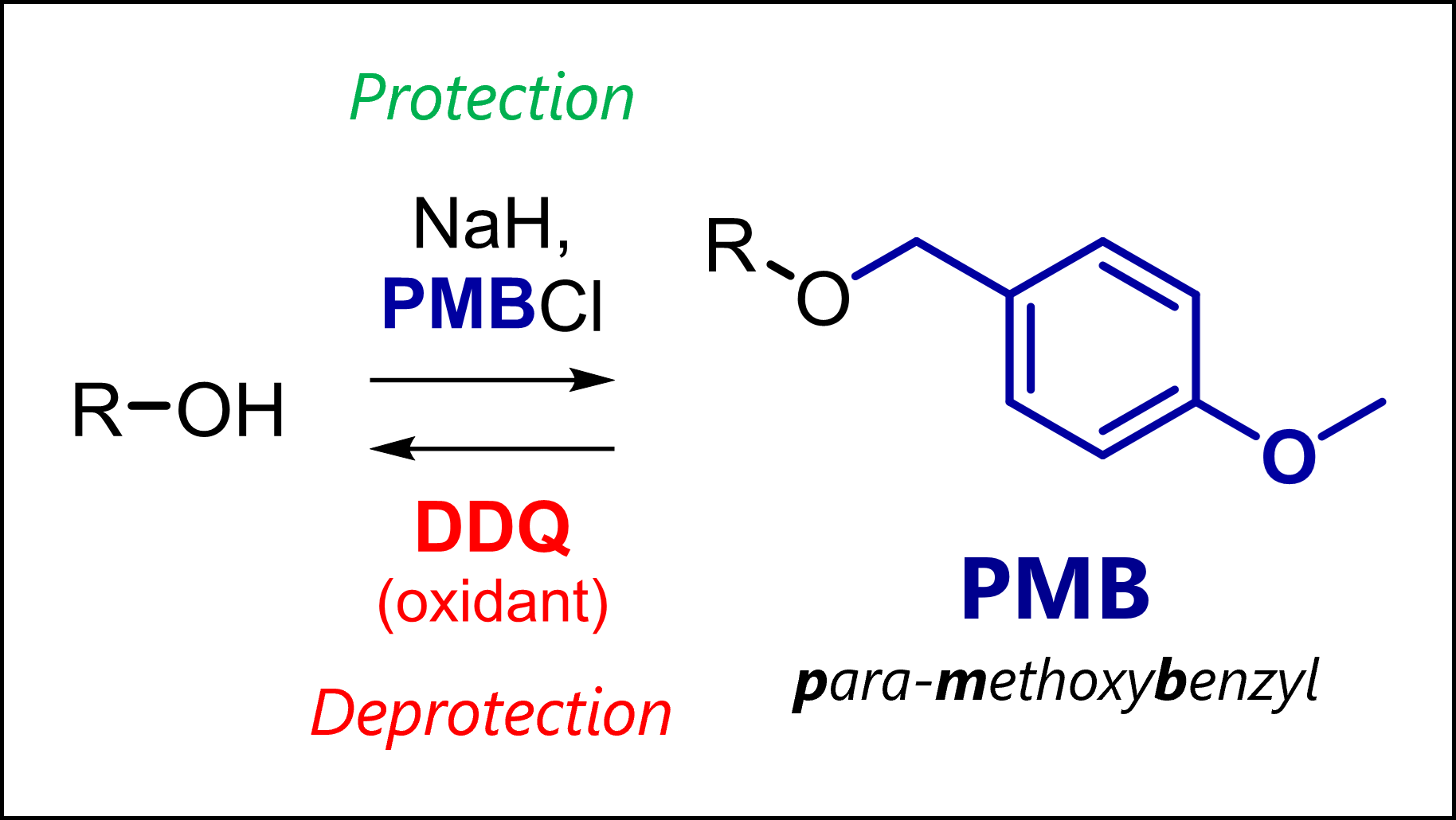
    As we have seen for PMB, many variants of activated agents can exist. The same is true for Boc. For instance, we can also use Boc-Cl (t-butyl chloroformate) but because it’s unstable and needs to be prepared freshly, Boc2O is much more convenient. Boc-ON is another variant; it’s an “oxyimino-nitrile” reagent.

    As a common theme for protecting groups: Remember that amines are more nucleophilicity than alcohols, so you can selectively protect them in many cases.

    Selective N-Boc protection

    Boc deprotection mechanism with acid

    Reaction mechanism of Boc deprotection with acid (TFA)

    Acids like TFA, HCl… can deprotect Boc groups. Protonation of the oxygen triggers fragmentation into a stabilized tertiary cation (inductive effect). It later deprotonates to form gaseous isobutene.
    The fragmented carbamate can decarboxylate, releasing CO2 (here you have a parallel of Boc anhydride introduction and its removal) and giving the free amine.

    Given the high steric hindrance of the carbamate, the Boc group is not base-labile like methyl esters, for instance.

    A potential issue are intermolecular side reactions of the intermediary t-butyl cation. An example from peptide chemistry is alkylation of nucleophilic amino acids methionine or tryptophan. That’s why you might see conditions which employ scavengers like thiophenol, anisole, cresol… to remove the reactive intermediate.

    Tired of serious chemistry?
    Take a break with “Periodic Tales – The Freshman Mole”, a satirical novel that’s the opposite of educational.

    Dedicated to every chemistry and STEM student who asked: “Why did no one warn me?”

    Boc protecting group Orthogonality

    Boc protection is a key tool for heterocycle and peptide synthesis. In solid phase peptide synthesis (SPPS), it is used as a protecting group for alpha-amino groups and amino acids lysine, tryptophan and histidine.

    Due to its acidic deprotection, it is orthogonal to other important amino acid protecting groups:

    • Fmoc (9-fluorenylmethoxycarbonyl) – removed with base
    • Cbz / Z (benzyloxycarbonyl) – removed with H2 reduction
    • Alloc (allyloxycarbonyl) – removed with transition metal catalysis (Pd)

    However, Boc is not stable to Lewis acids or oxidative conditions. We have seen that the O-PMB protecting group is removable with DDQ. In one case [1], treatment of the PMB ether did not result in any desired deprotection.

    DDQ deprotection of Boc

    Boc side reactions

    In organic chemistry, surprises wait around every corner. Don’t assume that protecting groups stay on forever, and only cleave on demand!

    Before, we have mentioned that alcohols are less nucleophilic than amines, allowing selective protections. In this example [2], the authors observed a N-O Boc transfer when preparing a chiral oxazolidinone auxiliary. Upon deprotection of the TBDMS group, the highly nucleophilic alkoxide grabs the Boc group from the nitrogen!

    Boc protecting group side reactions

    Overman et al used a more conscious Boc-participation in their synthesis towards the diazatricyclic core of sarain marine alkaloids. [3]
    Base generates the alkoxide which again attacks Boc. This time however, the group is not transferred (the negative charge would not be stabilized on the nitrogen, unlike the previous example). Instead, we see an intramolecular cyclization.

    Protecting group side reaction of Boc

    Boc in Peptide Synthesis

    As alluded to above – particularly in the early days – the Boc protecting group proved very useful for solid-phase peptide synthesis (SPPS). However, in the late 20th century, the Fmoc protecting group started to replace Boc methodology.

    Fmoc deprotection is generally milder than the moderate/ strong acidolysis steps used for Boc. More specifically, Fmoc proved more compatible with synthesis of amino acids that are susceptible to acid-catalysed side reactions.

    A good example is the synthesis of the peptide gramicidin A which contains four acid-sensitive tryptophan residues. Using Boc chemistry, yields were in the range of 5-24%. Switching to Fmoc dramatically improved the yields, in some cases to 87% [4].

    Closing Remarks

    The Boc group is pretty cool, and its deprotection mechanism is a must-know for every organic chemistry student. The orthogonality to base- or reduction-labile protecting groups make it a top pick for many total and peptide syntheses.

    However, like all protecting groups, it has its downsides. The carbamate carbon remains somewhat nucleophilic which opens avenues for surprising reactions, particularly intramolecular. Also, the acidic conditions and reactive tert-butyl-cations used can pose challenges to some systems. As always, smart planning and workarounds might be needed.

    Boc: ✅. Learn more about other protecting groups, or watch my educational videos for for advanced chemistry & science content!

    BOC protection experimental procedure 1 [5]

    “2-Bromophenylhydrazine hydrochloride (1.75 g, 7.83 mmol, 1 eq) was dissolved in THF (7.8 mL). Boc anhydride (1.71 g, 7.83 mmol, 1 eq) and NEt3 (1.31 ml, 9.40 mmol, 1.2 eq) were added and the reaction mixture was allowed to stir at r.t. overnight. After this time, the reaction mixture was concentrated in vacuo. The crude product was purified by flash column chromatography eluting with 100% hexane to 2% EtOAc in hexane to yield an orange solid (2.41 g, 8.43 mmol, quantitative).”

    BOC Protection experimental procedure 2 [6]

    One pot Cbz->Boc switch
    “To a solution of Cbz-carbamate SM (3.5 g, 6.81 mmol) in MeOH (25 mL) were added Pd/C (10 % w/w, 200 mg, 0.19 mmol) and Boc2O (2.17 g, 9.9 mmol) at room temperature. The reaction mixture was stirred under a hydrogen atmosphere (balloon) at room temperature for 6 h. The reaction mixture was filtered through a pad of celite, and then concentrated in vacuo. Flash column chromatography (silica gel, hexanes:EtOAc 10:1 → 7:1) afforded Boc-carbamate 42 (2.94 g, 90 %) as an oil.”

    BOC deprotection experimental procedure 1 [7]

    “Boc-L-allo-End(Cbz)2-OtBu (597 mg, 1 mmol) was dissolved in a mixture of TFA (10 mL) and water (1.0 mL). The mixture was stirred at room temperature for 3 h, then concentrated to give a brown oil. The resulting crude oil was azeotroped with toluene (3 x 10 mL) and concentrated in vacuo to remove any residual TFA.”

    BOC deprotection experimental procedure 2 [5]

    “Tert-Butyl (R)-(2-(2-(2,5-dichlorophenyl)pyrrolidin-1-yl)-2-oxoethyl)carbamate (0.13 g, 0.33 mmol, 1 eq) was dissolved in a mixture of DCM:TFA (5:1, 8 mL) and the reaction mixture was allowed to stir at room temperature until TLC showed disappearance of starting material. The reaction mixture was concentrated in vacuo to afford the free amine as a trifluoroacetate salt and was used directly without further purification.”

    BOC Protecting Group References

  • PMB Protecting Group: PMB Protection & Deprotection Mechanism

    PMB Protecting Group: PMB Protection & Deprotection Mechanism

    Conditions for protection and deprotection of the PMB protecting group (para-methoxybenzyl)

    🫡 Here’s what you’ll learn here:

    👀 Left: 3D model of the PMB group to help you visualize it.

    What is the PMB Protecting Group?

    PMB is a para-methoxybenzyl group, introduced by Yonemitsu in 1982 [1] to protect alcohols and other nucleophilic functional groups. Although PMB ethers are less stable to acid than normal benzyl ethers, they can uniquely be cleaved oxidatively (see below). This allows selective deprotection protocols which becomes critical in complex organic synthesis.

    PMB Protection Mechanism

    PMB protection mechanism

    The main method of PMB protection is the Williamson ether synthesis. This reaction uses a moderately strong base to generate an alkoxide which undergoes SN2 substitution with an activated agent like PMB-Cl. Typical conditions include sodium hydride NaH in THF/DMF or DMSO. However, stronger bases like nBuLi work as well.

    Beyond PMB-Cl, the reagent you will see most, there are also other methods of PMB protection. Beyond halide variants like PMB-I or PMB-Br, PMB-trichloroacetimidate with catalytic acid can also protect hindered tertiary alcohols. This is due to its higher reactivity. The PMB-pyridyl thiocarbonate with silver(I) is another example.

    PMB reagents

    PMB DeProtecTION Mechanism WITH DDQ

    PMB deprotection DDQ mechanism

    This protective group differs from others in that it undergoes easy single electron transfer (SET) with DDQ (2,3-dichloro-5,6-dicyano-l,4-benzoquinone).
    The electron-donating methoxy group stabilizes intermediary radical and oxonium ion. Normal benzyl protecting groups oxidize as well, but much slower than PMB. Obviously, this is due to the O-PMB methoxy group.

    After some proton exchanges, water captures the carbocation. As with every redox reaction, the electrons removed from O-PMB (oxidation) end up in the reduced hydroquinone product. Compared to the quinone in DDQ, this system is aromatic.

    The hemiacetal formed after water addition can fragment to give the deprotected hydroxy – as well as anisaldehyde. One drawback of is unintended side reaction of the aldehyde or intermediary PMB cations with nucleophilic functional groups, as well as polymerization. Thus, it is common to add nucleophilic scavengers (e.g., thiols) that capture these reactive species. This is a common thread for some deprotections (e.g., Boc).

    By the way, other oxidants like cerium(IV) ammonium nitrate (CAN) or NBS might work when DDQ fails.

    Tired of serious chemistry?
    Take a break with “Periodic Tales – The Freshman Mole”, a satirical novel that’s the opposite of educational.

    Dedicated to every chemistry and STEM student who asked: “Why did no one warn me?”

    PMB protecting group Orthogonality

    The DDQ reduction (typically 1.1-1.5 equivalents DDQ in dichloromethane-water mixtures) leaves several functional groups and other protecting groups (MOM, THP, TBS, Bz…) alone. This makes PMB an interesting orthogonal protecting group.

    However, electron-rich groups like dienes or trienes can be unintended victims of DDQ. This makes complete sense: electron-rich groups are nucleophiles and thus like to react with oxidants. In some cases, conjugation of dienes with electron-withdrawing groups sufficiently deactivates them, avoiding DDQ interference.

    Also, always be on the lookout for unique systems and reactivities!
    The synthesis of sterepolide, an antibiotic fungal metabolite, exemplifies this concept in oxidative deprotections [2]. When using an excess of DDQ (8 equivalents), the authors found the allylic O-PMB over-oxidized directly to the ketone. In this case, this was convenient as it gave the target natural product, saving one step. However, this can complicate cases where we need deprotection only (most of the time).

    Advanced Question: Special PMB Deprotection

    As a twist on the previous information, you can ponder on this research [3]. Using 0.5 equivalents of oxalyl chloride led to efficient PMB deprotection of various substrates.

    Closing Remarks

    PMB is a quite unique protecting group given the ability to remove it oxidatively (in addition to normal acid-mediated cleavage, not explicitly discussed here). In addition, PMB can also protect carboxylic acids, thiols, amines, amides… – or even phosphates! Basically, many other nucleophilic groups. The protection and oxidative removal make it a standard question in organic chemistry courses.

    Learn more about other protecting groups, or watch my educational videos for advanced chemistry & science content!

    PMB protection experimental procedure [4]

    “To an ice-water cooled solution of SM (3.91 g, 15.2 mmol, 1 equiv) in THF-DMF (100 mL-30mL) was added NaH (2.43 g, 60.8 mmol, 4 equiv, 60% suspended in mineral oil) portionwise. After addition, the reaction was stirred at the same temperature until cease of gas releasing, then p-methoxybenzyl bromide (6.11 g, 30.4 mmol, 2 equiv) in THF (25 mL) was slowly added at 0 °C. The reaction mixture was stirred at 0 °C for 1 h, then quenched by slowly adding 1M solution of NaOMe in MeOH (15 mL). The reaction mixture was diluted with EtOAc (300 mL) and washed with water and brine. The organic layer was dried over anhydrous Na2SO4 and concentrated in vacuo. The resulting residue was purified by silica gel flash chromatography (hexanes : EtOAc = 25:1-10:1) to give 5.28 g of product as a colorless oil in 92% yield.”

    PMB deprotection experimental procedure [5]

    “To a solution of SM (1.97 g, 3.95 mmol) in CH2Cl2:0.1 M pH 7 sodium phosphate buffer (18:1, 47 mL) at 0 °C was added 2,3-dichloro-5,6-dicyano-p-benzoquinone (1.17 g, 5.14 mmol) slowly as a solid. The reaction was warmed to rt and stirred for 1 h. The crude mixture was directly loaded onto a silica gel column with a top layer of MgSO4:sand (1:1, 0.5 inches). Elution with 5% to 30% EtOAc in hexanes yielded the product (1.45 g, 97%).”

    PMB References

  • Theoretical MDMA Synthesis in 3 Steps (Organic Chemistry)

    Theoretical MDMA Synthesis in 3 Steps (Organic Chemistry)

    In this post, we will look at MDMA’s history and its chemical syntheses. We will dispel myths about MDMA’s discovery and review the first kilo-gram scale MDMA synthesis published in a journal. We also dissect impressive recent clinical data that suggest ecstasy might help up to millions of people affected by PTSD. This might not be surprising if you’ve seen our discussion of psilocybin, ibogaine or LSD.

    How to Make MDMA?

    MDMA history

    The origin of MDMA has quite some tales associated with it. For example, crediting various German scientists with its discovery, even though no documentation or basis for this can be found. MDMA also was not intended for use in World War 1. However, there was quite some military experimentation on stimulants later on in the 1950s. The first point at least goes in the right direction, but the history is much more intriguing than this.

    The story actually starts with hydrastine, an anti-hemorrhagic natural product isolated from some random plant. By the 20th century, this drug became more expensive because the plant was becoming rarer and cultivation attempts failed. Therefore, the German company Merck was interested in finding ways to chemically synthesize it. They had a chad chemist reach out and offer a new, cheap synthetic procedure for hydrastine. For some reason, this guy signed the contract with Merck’s competitor Bayer which is quite funny. So the Merck scientists now had to find some new anti-hemorrhagic agents or new syntheses.

    You can appreciate that hydrastine is basically a more beefed up version of MDMA. Not too shockingly, the Merck scientists produced MDMA as a side product, and were not interested in it at all. While their 1912 patent refers to MDMA’s structure for the first time, they did not pursue or test it. Thus, the first MDMA publication and synthesis was published only 50 years later. Things gained traction from there on.

    MDMA Synthesis from Safrole

    Let’s check out three syntheses of MDMA starting with Merck’s synthesis from 1912. Second, we will review a late 20th century approach and third, look at the 2022 kilo-scale MDMA synthesis. There are other clandestine methods, actually mentioned in quite a few papers, but obviously we will not discuss this here.

    So safrole is a natural product used in the first half of the 20th century as a food flavor. 50 Cent would likely agree, it has a nice candy shop aroma. Human consumption was banned after people realized it increases rates of liver cancer. Feels like half of pesticides and food ingredients have the same story… Safrole was the starting material for Merck, but it can also be made synthetically in a few steps. Starting from Catechol, a double SN2 reaction forms 1,3-benzodioxole. Then, mono-bromination with NBS gives the aryl-bromide. Treatment with magnesium converts into a a Grignard reagent and used in a nucleophilic substitution with allyl bromide.

    From safrole it’s only two steps: first, a normal Markovnikov-selective hydrobromination, and another SN2 with methylamine to get MDMA. Optionally, you can also throw in a Finkelstein halogen exchange to get better yields in the substitution.

    MDMA Synthesis from Piperonal

    The second synthesis from piperonal starts with a Henri condensation reaction, creating a nitro-olefin. This can be reduced in acidic conditions to the ketone and a reductive amination with methylamine gives MDMA. So this synthesis uses a bit less bromines but more redox chemistry.

    Large Scale Synthesis of MDMA

    The final synthesis is pretty sweet. It was published in 2022 by the MAPS PBC. This is a biopharma company and subsidiary of MAPS, a non-profit working to raise awareness and understanding of psychedelic substances. They required large amounts of MDMA to supply their two Phase 3 clinical trials, which we will check out shortly. This is the first-ever document kilogram scale preparation of ecstasy. The product is appropriate for clinical and potential licensed therapeutic use due to the process’ validation and GMP compliance.

    Safrole and piperonal are controlled substances and thus highly regulated and difficult to obtain. Instead, the chemists used an arylbromide (an intermediate towards safrole) that is commercially accessible. This synthesis is similar to others we saw but comes with a twist. It starts again with a Grignard reaction but this time, with 1,2-propylene oxide as an electrophile. This epoxide nicely introduces the rest of the aliphatic chain, leaving a secondary alcohol which can, similar to other syntheses, be oxidized to the ketone. This ketone could be used without any purification in the final reductive amination step. You can check out the paper for more info – they go into some more details on validation and impurities. The experimental procedures are quite funny to read, as they ultimately isolate 3.6kg of MDMA HCl salt with over 99.4% purity.

    Tired of serious chemistry?
    Take a break with “Periodic Tales – The Freshman Mole”, a satirical novel that’s the opposite of educational.

    Dedicated to every chemistry and STEM student who asked: “Why did no one warn me?”

    PTSD Disease Burden

    So they put in a lot of effort in this process – but why is it worthwhile to look at PTSD? As crazy as it sounds, 6-7% of people in the US experience PTSD at some point in their lives, with about 1/3 of cases classified as severe. Often, there are other conditions decreasing chances of successful therapy, so these high-risk patients need more effective treatments. Just as a side note, this did remind me of other shockingly high estimates from the US National Institute of Mental Health – for example, they also state that 19% of adults experience what they termed “any anxiety disorder” per year. This is probably exaggerated, of course anxiety is human but proper clinical disorders are probably not affecting 20% of adults every year.

    As a last reason, many patients do not respond to first-line treatment with SSRIs – most notably, those are sertraline and paroxetine. The latter was actually part of the massive $3bn fraud settlement due to unlawful promotion and failure to report safety data. You might know that SSRIs are used in various depressive and anxiety disorders, so it would be nice to have a more targeted therapy or intervention. That’s why MAPS has been supporting MDMA clinical trials as early as 1992. All their advocacy and support culminated in two large-scale Phase 3 trials which were recently completed – we will dissect one of them.

    MDMA-Assisted Therapy for PTSD

    Let’s talk about study design before going into results – after an initial wash-out of any other psychiatric medications, patients went through four blocks consisting of various therapy sessions. The important points are the red experimental sessions – corresponding to the three occasions where patients in the treatment arm received an 80-120mg dose of MDMA. The individual therapy sessions consisted of supported introspection, experience sharing and probably some other things, and were conducted by trained clinical teams.

    This was a placebo-controlled Phase 3 study, so the total 90 patients were randomized to two trial arms. You can see that the patients in each trial had quite comparable characteristics, which obviously is important if you want to compare the effect of a medication – for example, the average duration of PTSD was around 13-15 years for both segments, although there was quite a large variation. From a trial endpoint perspective, there are two important measurements to look at. The CAPS-5 score is based on a semi-quantitative questionnaire that sheds some light on how bad the PTSD is – a score in the 40s, as present in the trial baseline, means very severe PTSD. The Beck Depression Inventory score tells you how depressed someone is – here a score above 30 is also severe.

    MDMA-Assisted Therapy for PTSD

    How did these severely affected patients they respond to MDMA-supported therapy? Both PTSD severity and depression scores decreased significantly from baseline until end of the last therapy block. You can see that normal therapy also improves outcomes, so these seemingly fluffy therapy sessions are useful – but the effect with MDMA on top is clearly higher. At the end of therapy, patients in the treatment arm were much better off (only mild to moderate PTSD, lower depressive symptoms). Please note that guided therapy was still needed, so just taking MDMA wouldn’t have the same effect and could make it even worse.

    While there were quite a few non-responders and only few patients in remission for placebo with therapy, the MDMA group had almost 40% of people completely PTSD-free and only few not responding at all. The nice thing was also that MDMA had an equally positive effect in high-risk people with other disorders, including the especially difficult-to-treat dissociative subtype of PTSD.

    Last, MDMA had a quite good safety profile. Side effects like muscle tightness or appetite loss were more frequent in the treatment arm but most are harmless. I would guess that you would rather lose appetite and have some tight muscles, than be afflicted with severe PTSD. More severe adverse events, like suicide attempts or self-harm were actually only observed in the placebo control, probably because their intervention was less effective. So at least in the short-term, there were no concerning safety signals.

    It is still a mystery how this works physiologically, but the literature speculates MDMA might reopen a window of neuroplasticity that allows for processing and release of fear and other emotions. Doing so, MDMA might support and catalyze therapeutic processing by allowing patients to stay emotionally engaged while revisiting traumatic experiences without becoming overwhelmed.

    MDMA FDA approval in 2024?

    The FDA already granted MDMA-assisted therapy a break-through designation in 2017 – so with this promising data in hand, MAPS PBC is expecting to file for FDA approval in late 2023. It will be interesting to see how they decide on this. Let me surprise you with another score which I intentionally left out earlier for simplicity, the Sheehan Disability Scale. This is measures how well an individual functions in key life dimensions, and it seems like MDMA-assisted therapy could also help thousands or millions of people become more functional and independent in their daily lives. Supposedly, US veterans report service-related disabilities that cost the government $73 billion per year. A sizeable chunk of these costs are probably due to PTSD, which might also encourage the FDA to approve MDMA-assisted therapy, at least for high risk patients.

    I think this was quite a nice journey, going from almost ancient chemistry to modern clinical outcomes. Thanks for reading and until next time!

    MDMA SourceS/ References

    • Fully Validated, Multi-Kilogram cGMP Synthesis of MDMA (ACS Omega 2022, 7, 900−907)
    • MDMA-assisted therapy for severe PTSD: a randomized, double-blind, placebo-controlled phase 3 study (Nature Medicine 2021, 27, 1025)
    • The origin of MDMA (‘Ecstasy’) – separating the facts from the myth (Die Pharmazie 2006, 61, 966)
  • Theoretical LSD Synthesis in 7 Steps (Organic Chemistry)

    Theoretical LSD Synthesis in 7 Steps (Organic Chemistry)

    This educational article covers a published synthesis of lysergic acid, the precursor of the psychoactive drug lysergic acid diethylamide or LSD.

    A team of chemists recently reported a synthesis of LSD in only 6 laboratory steps! We will look at the chemistry behind it and uncover some other insights – for example, how do chemists measure how trippy a molecule is?

    Rationale for LSD synthesis

    So these scientists, are they a bunch of Breaking Bad wannabes or why would they investigate even more chemical syntheses of LSD? Well, LSD derivatives such as bromocryptine can be pharmacologically useful for treatment of neurological, metabolic and other disorders. This means we want to get more efficient at making LSD-like scaffolds for drug discovery.

    In 2020, there was an interesting structure-activity relationship study. It showed for the first time that psychedelic compounds, such as derivatives of DMT, can be engineered lose hallucinogenic side effects while retaining their useful psychoplastogenic properties. The left-hand side 5-methoxy-DMT makes you trip. The isomer with the methoxy substituent shifted by just one carbon, does not. While this might be disappointing for some of you, it’s obviously better if patients are not hallucinating weird shit after taking their pills.

    If you wondered – trippy-ness can be estimated by looking at how often mice violently shake their head after administration of psychoactive drugs. This is a well-validated proxy for hallucinations and was first established already 70 years ago! You can see that while 5-methoxy-DMT leads to head twitching, the 6-methoxy isomer has no significant hallucinogenic activity. There’s actually a nice concentration-dependent relationship.

    Six-Step Synthesis of Lysergic Acid

    So how does this super-quick route look like? This synthesis builds on a key intramolecular Heck reaction which creates the key vinyl bond that is present in LSD. This Heck-approach is not an invention of the 2023 synthesis, as it had been used in previous, longer syntheses already. However, this route efficiently traced the intermediate back to this indole containing. This starting material can be bought commercially and conveniently has the bromo group for the Heck reaction. Obviously this makes a lot more sense than unnecessarily taking apart the indole ring. Let’s take a closer look at the specifics of this synthesis.

    The first step was a magnesium-halogen exchange of this iodopyridine to create a heterocyclic nucleophile. This one is happy to attack the electrophilic carbon of the functionalized aldehyde, leaving a hydroxyl group in the product. As you might remember, there is no oxygen in LSD at this position. Thus, the next step simply removed this group by reduction with triethylsilane.

    The acid used in this step removed the N-Boc protecting group, so they re-installed afterwards. After this protection, the most nucleophilic group is the pyridine nitrogen – so it was methylated with methyl triflate. This gave a pyridinium salt which was reduced by sodium borohydride. Two hydride equivalents attack the ring: The first one gives the reduced tertiary amine that is part of LSD. The second hydride reduces one of the double bonds, leaving the alpha-beta unsaturated ester. All of this happened in the same reaction vessel. But still, the authors were a bit sneaky to categorize this as just one single step.

    But wait – to enable the key Heck coupling reaction, the olefin actually needs to be located at the other carbon. They achieved this by using LiTMP as a strong base. The resulting isomerized anion which can be protonated in a diastereoselective manner. The desired isomer has the ester on the same side as the existing hydrogen of the 6-membered ring. While the preference isn’t great, they formed it in slight excess over the undesired one. Conveniently, they found subjecting it to the same conditions recycled some of it to the desired product.

    The Heck reaction proceeded with the standard mechanism. Oxidative addition of Pd(0) allowed for olefin insertion and creation of the C-C bond in blue. Now, given there are two beta-hydrogens available, there are two pathways towards elimination. There’s the orange hydride elimination, and the pink one, which is preferred in a rough 1 to 3 ratio. Note that the stereochemistry of the ester became wobbly again the orange product. This is because the reaction occurred at a 100 degrees with mild base with some isomerization taking place.

    Even though we end up with three different products, it’s no big deal. They simply added potassium hydroxide to all, and heated things up to get to lysergic acid in around 50% yield. This is double-deprotection and isomerization. Natural products are usually stable isomers so it’s not surprising that the isomerization forms the configuration present in LSD preferentially. Unfortunately, their final product is not so satisfying as they only isolated a brown solid. I don’t suggest supplying this to the dangerous dealer in the neighborhood. I’ve seen some procedures getting nice white crystals but these folks didn’t care too much about ultra-pure product.

    Lastly, they showed that this synthetic route could be useful to explore and study LSD analogs – remember the methoxy-substituted DMT structures at the start? The started with a chloro-substituted indole starting material and replicated the reactions – including the Heck reaction – to create a C12-cholor-lysergic acid derivative. Theoretically, you could create different LSD analogs now by functionalizing the aryl chloride – which might help scientists find future drugs based on LSD with differentiated therapeutic profiles. 

    Tired of serious chemistry?
    Take a break with “Periodic Tales – The Freshman Mole”, a satirical novel that’s the opposite of educational.

    Dedicated to every chemistry and STEM student who asked: “Why did no one warn me?”

    If you are interested in the academic synthesis of other psychedelics, check out the discussion of ibogaine, psilocybin, MDMA or THC-P.

    LSD synthesis references

    – Six-Step Synthesis of (±)-Lysergic Acid | J. Org. Chem. 2023, 88, 2158
    – Identification of Psychoplastogenic N,N-Dimethylaminoisotryptamine (isoDMT) Analogues through Structure–Activity Relationship Studies | J. Med. Chem. 2020, 63, 1142

  • What is THCP? Synthesis of THCP & Cannabinoid Science

    What is THCP? Synthesis of THCP & Cannabinoid Science


    THCP or THC-P is a recently discovered cannabinoid found in the cannabis plant, joining the ranks of THC and CBD. It has garnered broad attention in cannabinoid research due to its therapeutic potential. There are some wild claims of potency out there. What are the real facts and science behind THCP and how is it chemically synthesized?

    What is THCP?

    Did you know that almost 150 distinct cannabinoids have been isolated to date? Cannabis sativa is a plant that sparks debates. Some see it as a valuable source of medicine for conditions like glaucoma and epilepsy. But, at the same time, it’s the most commonly used illegal drug worldwide.

    At a molecular level, THCP shares the basic framework common to cannabinoids such as tetrahydrocannabinol (THC / delta-9-THC) and cannabidiol (CBD). You can see the chemical structure in the figure.

    What sets THCP apart is its heptyl side chain. Chemically speaking, this is a seven-carbon alkyl group with the chemical formula -C7H15. THC on the other hand bears a pentyl group (-C5H11). The length of this chain directly influences binding to the CB receptors (see below) and thus the cannabimimetic activity. This side chain is also called the pharmacophore due to its influence on biochemical activity.

    THCP Flower Concentration

    The concentration of THC-P in Cannabis Sativa is estimated to be 0.0023% to 0.0136% (0.02–0.14 mg/g) [1]. In comparison, normal THC occurs in up to 30%! These levels seem too low to trigger significant effects or subtherapeutic.

    However, not only is THC-P a stronger CB binder than THC, but other phytochemicals may influence efficacy and experience of C. sativa use. Through a so-called entourage effect, there may be synergistic interactions with the major cannabinoids and other phytochemical components.

    Due to the low natural concentration, THC-P is more conveniently (for research purposes) synthesized chemically.

    How is THC-P Made? (Synthesis)

    The organic chemistry behind THCP is actually simple. The starting material is a chiral allylic alcohol for the enantioselective synthesis. The hydroxy group can be substituted with an aromatic ring bearing the linear side chain. Under acidic conditions, we have first the allylic substitution and second an addition of a phenol group to the olefin.

    Taken from: Scientific Reports 2019, 9, 20335 (Creative Commons 4.0)
    Reagents and conditions: (a) 5-heptylbenzene-1,3-diol (1.1 eq.), pTSA (0.1 eq.), CH2Cl2, r.t., 90 min.; (b) 5-heptylbenzene-1,3-diol (1.1 eq.), pTSA (0.1 eq.), DCM, r.t., 48 h; (c) pTSA (0.1 eq.), DCM, r.t., 48 h; (d) ZnCl2 (0.5 eq.), 4 N HCl in dioxane (1 mL per 100 mg of Δ8-THCP), dry DCM, argon, 0 °C to r.t., 2 h. (e) 1.75 M potassium t-amylate in toluene (2.5 eq.), dry toluene, argon, −15 °C, 1 h.

    The only issue in this very direct synthesis is the formation of olefin isomers. To get to the right configuration in THC-P, the intermediate (-)-trans8-THCP can be isomerized. This works through step-wise hydrochlorination and a surprisingly very selective elimination using potassium t-amylate as base.

    THC-P Mechanism of Action

    THC-P interacts with cannabinoid receptors CB1 and CB2 which are part of the so-called endocannabinoid system or ECS. The ECS is a complex network of receptors, endocannabinoids, and enzymes distributed throughout the body. It plays a crucial role in maintaining homeostasis which is the body’s self-regulation process.

    Early research suggests that THC-P may have a higher affinity for CB1 receptors, which are predominantly found in the central nervous system. CB1 receptors play a key role in regulating neurotransmitter release, impacting various physiological functions such as mood, appetite, and pain perception.

    Taken from: Scientific Reports 2019, 9, 20335 (Creative Commons 4.0)
    In vitro activity and docking calculation of Δ9-THCP. (a) Binding affinity (Ki) of the four homologues of Δ9-THC against CB1 and CB2. (b) Dose-response studies of Δ9-THCP against hCB1 and hCB2. (c) Docking pose of (-)-trans-Δ9-THCP (blue sticks), in complex with hCB1. (d) Binding pocket of hCB1 receptor, highlighting the positioning of the heptyl chain within the long hydrophobic channel of the receptor.

    The figure d) shows the binding very nicely. The yellow dashed line represents a pocket of hydrophobic amino acids where the linear alkyl side chains reside. Because the longer heptyl side chain has more contacts, it shouldn’t surprise you that THC-P had stronger binding compared to normal THC.

    As you can see in a), THC-P has a >30-fold and >6-fold increased binding for the cannabinoid receptor 1 (CB1) and cannabinoid receptor 2 (CB2). The affinity value of 1.2 nM (nanomolar) is very strong on a “molecular” level!

    However, the research is too immature to be able to say “how much more potent” it actually is. Nevertheless, preliminary evidence suggests that THC-P may modulate neurotransmitter release in a way that differentiates it from other cannabinoids. There are several areas of potential therapeutic application.

    THC-P Effects: Appetite Regulation

    One notable aspect of THC-P is its reported appetite-suppressant effects. We clearly need more research to understand the underlying mechanisms but this property raises the possibility of THC-P as a tool for weight management and addressing conditions related to overeating. A study conducted on rodents investigated the effects of THC-P on feeding behavior. The results suggested that THC-P administration led to a reduction in food intake, providing initial support for its appetite-modulating properties.

    THC-P Mood Disorders and Anxiety

    The interaction of THC-P with CB1 receptors, particularly in the brain, points to potential applications in mood disorders and anxiety management. The modulation of neurotransmitter release in key brain regions may offer a novel approach to addressing conditions characterized by mood imbalances. However, preclinical studies have so far only indicated the anxiolytic potential of cannabinoids in general, not THC-P specifically.

    THCP Epilepsy

    THC-P may hold promise for neurological conditions. Conditions such as epilepsy and neurodegenerative disorders might benefit from further investigation into THC-P’s effects on neuronal excitability and neuroinflammation. Preliminary data from animal studies has shown cannabinoids, including THC-P, to have anticonvulsant properties.

    Is THCP Legal?

    The legal status of THC-P varies by country. In the United States, THCP unlike THC is not specifically listed as a Controlled Substance federally. However, regulations vary by state or country. In the rest of the world, THCP is currently legal in Germany, for example. Other countries classify THC-P as a controlled substance. With the current dynamic regarding medical use of cannabis, shifts in legal stands and regulations are to be expected. We have discussed increasing interest on the public level on psychedelic compounds such as ibogaine or psilocybin/ psilocin.

    Is THCP Safe?

    Given the early days of THCP research, safety aspects, particularly in humans, are not clear. The psychotropic effects of THC-P could raise concerns, particularly regarding cognitive function and the potential for dependence. Long-term studies are essential to assess the safety profile and any adverse effects associated with THC-P use.

    In addition, it will be key to establish standardized testing methods to validate high-quality material for research purposes. Standardization is essential for accurate dosing, reproducibility of results, and ensuring the reliability of research.

    As THCP is present in only little amounts in C. sativa, THCP products on the market may have been produced synthetically and not have been tested for safety, purity, or potency. Thus, we discourage consumption of (any) supposedly safe drugs and medicines in absence of professional medical oversight and need.

    Summary

    THC-P, with its distinctive molecular structure and potential therapeutic applications, represents a promising avenue for cannabinoid research. As our understanding of its chemical properties and interactions with the endocannabinoid system deepens, the door opens to innovative approaches in medical science.

    While challenges exist, the increasing scientific interest suggest that THC-P could play a significant role in the future of medicine. Responsible research, transparent communication, and thoughtful regulation are paramount in unlocking the full potential of THC-P, other cannabinoids and medicines at large.

    Information for THCP

    • J. Nat. Prod. 2021, 84, 2, 531 | (−)-trans-Δ9‑Tetrahydrocannabiphorol Content of Cannabis sativa Inflorescence from Various Chemotypes
    • Scientific Reports 2019, 9, 20335 | A novel phytocannabinoid isolated from Cannabis sativa L. with an in vivo cannabimimetic activity higher than Δ9-tetrahydrocannabinol: Δ9-Tetrahydrocannabiphorol