In this post, we will look at MDMA’s history and its chemical syntheses. We will dispel myths about MDMA’s discovery and review the first kilo-gram scale MDMA synthesis published in a journal. We also dissect impressive recent clinical data that suggest ecstasy might help up to millions of people affected by PTSD. This might not be surprising if you’ve seen our discussion of psilocybin, ibogaine or LSD.
How to Make MDMA?
I’m not sorry to disappoint you. This is purely educational and not a DIY-tutorial for illegal clandestine synthesis. Also, don’t use this information to rationalize your drug use. Long-term and side effects of MDMA can be severe and regular use is discouraged even by clinical advocates.
MDMA history
The origin of MDMA has quite some tales associated with it. For example, crediting various German scientists with its discovery, even though no documentation or basis for this can be found. MDMA also was not intended for use in World War 1. However, there was quite some military experimentation on stimulants later on in the 1950s. The first point at least goes in the right direction, but the history is much more intriguing than this.
The story actually starts with hydrastine, an anti-hemorrhagic natural product isolated from some random plant. By the 20th century, this drug became more expensive because the plant was becoming rarer and cultivation attempts failed. Therefore, the German company Merck was interested in finding ways to chemically synthesize it. They had a chad chemist reach out and offer a new, cheap synthetic procedure for hydrastine. For some reason, this guy signed the contract with Merck’s competitor Bayer which is quite funny. So the Merck scientists now had to find some new anti-hemorrhagic agents or new syntheses.
You can appreciate that hydrastine is basically a more beefed up version of MDMA. Not too shockingly, the Merck scientists produced MDMA as a side product, and were not interested in it at all. While their 1912 patent refers to MDMA’s structure for the first time, they did not pursue or test it. Thus, the first MDMA publication and synthesis was published only 50 years later. Things gained traction from there on.
MDMA Synthesis from Safrole
Let’s check out three syntheses of MDMA starting with Merck’s synthesis from 1912. Second, we will review a late 20th century approach and third, look at the 2022 kilo-scale MDMA synthesis. There are other clandestine methods, actually mentioned in quite a few papers, but obviously we will not discuss this here.
So safrole is a natural product used in the first half of the 20th century as a food flavor. 50 Cent would likely agree, it has a nice candy shop aroma. Human consumption was banned after people realized it increases rates of liver cancer. Feels like half of pesticides and food ingredients have the same story… Safrole was the starting material for Merck, but it can also be made synthetically in a few steps. Starting from Catechol, a double SN2 reaction forms 1,3-benzodioxole. Then, mono-bromination with NBS gives the aryl-bromide. Treatment with magnesium converts into a a Grignard reagent and used in a nucleophilic substitution with allyl bromide.
From safrole it’s only two steps: first, a normal Markovnikov-selective hydrobromination, and another SN2 with methylamine to get MDMA. Optionally, you can also throw in a Finkelstein halogen exchange to get better yields in the substitution.
MDMA Synthesis from Piperonal
The second synthesis from piperonal starts with a Henri condensation reaction, creating a nitro-olefin. This can be reduced in acidic conditions to the ketone and a reductive amination with methylamine gives MDMA. So this synthesis uses a bit less bromines but more redox chemistry.
Large Scale Synthesis of MDMA
The final synthesis is pretty sweet. It was published in 2022 by the MAPS PBC. This is a biopharma company and subsidiary of MAPS, a non-profit working to raise awareness and understanding of psychedelic substances. They required large amounts of MDMA to supply their two Phase 3 clinical trials, which we will check out shortly. This is the first-ever document kilogram scale preparation of ecstasy. The product is appropriate for clinical and potential licensed therapeutic use due to the process’ validation and GMP compliance.
Safrole and piperonal are controlled substances and thus highly regulated and difficult to obtain. Instead, the chemists used an arylbromide (an intermediate towards safrole) that is commercially accessible. This synthesis is similar to others we saw but comes with a twist. It starts again with a Grignard reaction but this time, with 1,2-propylene oxide as an electrophile. This epoxide nicely introduces the rest of the aliphatic chain, leaving a secondary alcohol which can, similar to other syntheses, be oxidized to the ketone. This ketone could be used without any purification in the final reductive amination step. You can check out the paper for more info – they go into some more details on validation and impurities. The experimental procedures are quite funny to read, as they ultimately isolate 3.6kg of MDMA HCl salt with over 99.4% purity.
Dedicated to every chemistry and STEM student who asked: “Why did no one warn me?”
PTSD Disease Burden
So they put in a lot of effort in this process – but why is it worthwhile to look at PTSD? As crazy as it sounds, 6-7% of people in the US experience PTSD at some point in their lives, with about 1/3 of cases classified as severe. Often, there are other conditions decreasing chances of successful therapy, so these high-risk patients need more effective treatments. Just as a side note, this did remind me of other shockingly high estimates from the US National Institute of Mental Health – for example, they also state that 19% of adults experience what they termed “any anxiety disorder” per year. This is probably exaggerated, of course anxiety is human but proper clinical disorders are probably not affecting 20% of adults every year.
As a last reason, many patients do not respond to first-line treatment with SSRIs – most notably, those are sertraline and paroxetine. The latter was actually part of the massive $3bn fraud settlement due to unlawful promotion and failure to report safety data. You might know that SSRIs are used in various depressive and anxiety disorders, so it would be nice to have a more targeted therapy or intervention. That’s why MAPS has been supporting MDMA clinical trials as early as 1992. All their advocacy and support culminated in two large-scale Phase 3 trials which were recently completed – we will dissect one of them.
MDMA-Assisted Therapy for PTSD
Let’s talk about study design before going into results – after an initial wash-out of any other psychiatric medications, patients went through four blocks consisting of various therapy sessions. The important points are the red experimental sessions – corresponding to the three occasions where patients in the treatment arm received an 80-120mg dose of MDMA. The individual therapy sessions consisted of supported introspection, experience sharing and probably some other things, and were conducted by trained clinical teams.
This was a placebo-controlled Phase 3 study, so the total 90 patients were randomized to two trial arms. You can see that the patients in each trial had quite comparable characteristics, which obviously is important if you want to compare the effect of a medication – for example, the average duration of PTSD was around 13-15 years for both segments, although there was quite a large variation. From a trial endpoint perspective, there are two important measurements to look at. The CAPS-5 score is based on a semi-quantitative questionnaire that sheds some light on how bad the PTSD is – a score in the 40s, as present in the trial baseline, means very severe PTSD. The Beck Depression Inventory score tells you how depressed someone is – here a score above 30 is also severe.
MDMA-Assisted Therapy for PTSD
How did these severely affected patients they respond to MDMA-supported therapy? Both PTSD severity and depression scores decreased significantly from baseline until end of the last therapy block. You can see that normal therapy also improves outcomes, so these seemingly fluffy therapy sessions are useful – but the effect with MDMA on top is clearly higher. At the end of therapy, patients in the treatment arm were much better off (only mild to moderate PTSD, lower depressive symptoms). Please note that guided therapy was still needed, so just taking MDMA wouldn’t have the same effect and could make it even worse.
While there were quite a few non-responders and only few patients in remission for placebo with therapy, the MDMA group had almost 40% of people completely PTSD-free and only few not responding at all. The nice thing was also that MDMA had an equally positive effect in high-risk people with other disorders, including the especially difficult-to-treat dissociative subtype of PTSD.
Last, MDMA had a quite good safety profile. Side effects like muscle tightness or appetite loss were more frequent in the treatment arm but most are harmless. I would guess that you would rather lose appetite and have some tight muscles, than be afflicted with severe PTSD. More severe adverse events, like suicide attempts or self-harm were actually only observed in the placebo control, probably because their intervention was less effective. So at least in the short-term, there were no concerning safety signals.
It is still a mystery how this works physiologically, but the literature speculates MDMA might reopen a window of neuroplasticity that allows for processing and release of fear and other emotions. Doing so, MDMA might support and catalyze therapeutic processing by allowing patients to stay emotionally engaged while revisiting traumatic experiences without becoming overwhelmed.
MDMA FDA approval in 2024?
The FDA already granted MDMA-assisted therapy a break-through designation in 2017 – so with this promising data in hand, MAPS PBC is expecting to file for FDA approval in late 2023. It will be interesting to see how they decide on this. Let me surprise you with another score which I intentionally left out earlier for simplicity, the Sheehan Disability Scale. This is measures how well an individual functions in key life dimensions, and it seems like MDMA-assisted therapy could also help thousands or millions of people become more functional and independent in their daily lives. Supposedly, US veterans report service-related disabilities that cost the government $73 billion per year. A sizeable chunk of these costs are probably due to PTSD, which might also encourage the FDA to approve MDMA-assisted therapy, at least for high risk patients.
I think this was quite a nice journey, going from almost ancient chemistry to modern clinical outcomes. Thanks for reading and until next time!
This educational article covers a published synthesis of lysergic acid, the precursor of the psychoactive drug lysergic acid diethylamide or LSD.
A team of chemists recently reported a synthesis of LSD in only 6 laboratory steps! We will look at the chemistry behind it and uncover some other insights – for example, how do chemists measure how trippy a molecule is?
Rationale for LSD synthesis
So these scientists, are they a bunch of Breaking Bad wannabes or why would they investigate even more chemical syntheses of LSD? Well, LSD derivatives such as bromocryptine can be pharmacologically useful for treatment of neurological, metabolic and other disorders. This means we want to get more efficient at making LSD-like scaffolds for drug discovery.
In 2020, there was an interesting structure-activity relationship study. It showed for the first time that psychedelic compounds, such as derivatives of DMT, can be engineered lose hallucinogenic side effects while retaining their useful psychoplastogenic properties. The left-hand side 5-methoxy-DMT makes you trip. The isomer with the methoxy substituent shifted by just one carbon, does not. While this might be disappointing for some of you, it’s obviously better if patients are not hallucinating weird shit after taking their pills.
If you wondered – trippy-ness can be estimated by looking at how often mice violently shake their head after administration of psychoactive drugs. This is a well-validated proxy for hallucinations and was first established already 70 years ago! You can see that while 5-methoxy-DMT leads to head twitching, the 6-methoxy isomer has no significant hallucinogenic activity. There’s actually a nice concentration-dependent relationship.
Six-Step Synthesis of Lysergic Acid
So how does this super-quick route look like? This synthesis builds on a key intramolecular Heck reaction which creates the key vinyl bond that is present in LSD. This Heck-approach is not an invention of the 2023 synthesis, as it had been used in previous, longer syntheses already. However, this route efficiently traced the intermediate back to this indole containing. This starting material can be bought commercially and conveniently has the bromo group for the Heck reaction. Obviously this makes a lot more sense than unnecessarily taking apart the indole ring. Let’s take a closer look at the specifics of this synthesis.
The first step was a magnesium-halogen exchange of this iodopyridine to create a heterocyclic nucleophile. This one is happy to attack the electrophilic carbon of the functionalized aldehyde, leaving a hydroxyl group in the product. As you might remember, there is no oxygen in LSDat this position. Thus, the next step simply removed this group by reduction with triethylsilane.
The acid used in this step removed the N-Boc protecting group, so they re-installed afterwards. After this protection, the most nucleophilic group is the pyridine nitrogen – so it was methylated with methyl triflate. This gave a pyridinium salt which was reduced by sodium borohydride. Two hydride equivalents attack the ring: The first one gives the reduced tertiary amine that is part of LSD. The second hydride reduces one of the double bonds, leaving the alpha-beta unsaturated ester. All of this happened in the same reaction vessel. But still, the authors were a bit sneaky to categorize this as just one single step.
But wait – to enable the key Heck coupling reaction, the olefin actually needs to be located at the other carbon. They achieved this by using LiTMP as a strong base. The resulting isomerized anion which can be protonated in a diastereoselective manner. The desired isomer has the ester on the same side as the existing hydrogen of the 6-membered ring. While the preference isn’t great, they formed it in slight excess over the undesired one. Conveniently, they found subjecting it to the same conditions recycled some of it to the desired product.
The Heck reaction proceeded with the standard mechanism. Oxidative addition of Pd(0) allowed for olefin insertion and creation of the C-C bond in blue. Now, given there are two beta-hydrogens available, there are two pathways towards elimination. There’s the orange hydride elimination, and the pink one, which is preferred in a rough 1 to 3 ratio. Note that the stereochemistry of the ester became wobbly again the orange product. This is because the reaction occurred at a 100 degrees with mild base with some isomerization taking place.
Even though we end up with three different products, it’s no big deal. They simply added potassium hydroxide to all, and heated things up to get to lysergic acid in around 50% yield. This is double-deprotection and isomerization. Natural products are usually stable isomers so it’s not surprising that the isomerization forms the configuration present in LSD preferentially. Unfortunately, their final product is not so satisfying as they only isolated a brown solid. I don’t suggest supplying this to the dangerous dealer in the neighborhood. I’ve seen some procedures getting nice white crystals but these folks didn’t care too much about ultra-pure product.
Lastly, they showed that this synthetic route could be useful to explore and study LSD analogs – remember the methoxy-substituted DMT structures at the start? The started with a chloro-substituted indole starting material and replicated the reactions – including the Heck reaction – to create a C12-cholor-lysergic acid derivative. Theoretically, you could create different LSD analogs now by functionalizing the aryl chloride – which might help scientists find future drugs based on LSD with differentiated therapeutic profiles.
THCP or THC-P is a recently discovered cannabinoid found in the cannabis plant, joining the ranks of THC and CBD. It has garnered broad attention in cannabinoid research due to its therapeutic potential. There are some wild claims of potency out there. What are the real facts and science behind THCP and how is it chemically synthesized?
What is THCP?
Did you know that almost 150 distinct cannabinoids have been isolated to date? Cannabis sativa is a plant that sparks debates. Some see it as a valuable source of medicine for conditions like glaucoma and epilepsy. But, at the same time, it’s the most commonly used illegal drug worldwide.
At a molecular level, THCP shares the basic framework common to cannabinoids such as tetrahydrocannabinol (THC / delta-9-THC) and cannabidiol (CBD). You can see the chemical structure in the figure.
What sets THCP apart is its heptyl side chain. Chemically speaking, this is a seven-carbon alkyl group with the chemical formula -C7H15. THC on the other hand bears a pentyl group (-C5H11). The length of this chain directly influences binding to the CB receptors(see below) and thus the cannabimimetic activity. This side chain is also called the pharmacophore due to its influence on biochemical activity.
THCP Flower Concentration
The concentration of THC-P in Cannabis Sativa is estimated to be 0.0023% to 0.0136% (0.02–0.14 mg/g) [1]. In comparison, normal THC occurs in up to 30%! These levels seem too low to trigger significant effects or subtherapeutic.
However, not only is THC-P a stronger CB binder than THC, but other phytochemicals may influence efficacy and experience of C. sativa use. Through a so-called entourage effect, there may be synergistic interactions with the major cannabinoids and other phytochemical components.
Due to the low natural concentration, THC-P is more conveniently (for research purposes) synthesized chemically.
How is THC-P Made? (Synthesis)
The organic chemistry behind THCP is actually simple. The starting material is a chiral allylic alcohol for the enantioselective synthesis. The hydroxy group can be substituted with an aromatic ring bearing the linear side chain. Under acidic conditions, we have first the allylic substitution and second an addition of a phenol group to the olefin.
Taken from: Scientific Reports 2019, 9, 20335 (Creative Commons 4.0) Reagents and conditions: (a) 5-heptylbenzene-1,3-diol (1.1 eq.), pTSA (0.1 eq.), CH2Cl2, r.t., 90 min.; (b) 5-heptylbenzene-1,3-diol (1.1 eq.), pTSA (0.1 eq.), DCM, r.t., 48 h; (c) pTSA (0.1 eq.), DCM, r.t., 48 h; (d) ZnCl2 (0.5 eq.), 4 N HCl in dioxane (1 mL per 100 mg of Δ8-THCP), dry DCM, argon, 0 °C to r.t., 2 h. (e) 1.75 M potassium t-amylate in toluene (2.5 eq.), dry toluene, argon, −15 °C, 1 h.
The only issue in this very direct synthesis is the formation of olefin isomers. To get to the right configuration in THC-P, the intermediate (-)-trans-Δ8-THCP can be isomerized. This works through step-wise hydrochlorination and a surprisingly very selective elimination using potassium t-amylate as base.
THC-P Mechanism of Action
THC-P interacts with cannabinoid receptors CB1 and CB2 which are part of the so-called endocannabinoid system or ECS. The ECS is a complex network of receptors, endocannabinoids, and enzymes distributed throughout the body. It plays a crucial role in maintaining homeostasis which is the body’s self-regulation process.
Early research suggests that THC-P may have a higher affinity for CB1 receptors, which are predominantly found in the central nervous system. CB1 receptors play a key role in regulating neurotransmitter release, impacting various physiological functions such as mood, appetite, and pain perception.
Taken from: Scientific Reports 2019, 9, 20335 (Creative Commons 4.0) In vitro activity and docking calculation of Δ9-THCP. (a) Binding affinity (Ki) of the four homologues of Δ9-THC against CB1 and CB2. (b) Dose-response studies of Δ9-THCP against hCB1 and hCB2. (c) Docking pose of (-)-trans-Δ9-THCP (blue sticks), in complex with hCB1. (d) Binding pocket of hCB1 receptor, highlighting the positioning of the heptyl chain within the long hydrophobic channel of the receptor.
The figure d) shows the binding very nicely. The yellow dashed line represents a pocket of hydrophobic amino acids where the linear alkyl side chains reside. Because the longer heptyl side chain has more contacts, it shouldn’t surprise you that THC-P had stronger binding compared to normal THC.
As you can see in a), THC-P has a >30-fold and >6-fold increased binding for the cannabinoid receptor 1 (CB1) and cannabinoid receptor 2 (CB2). The affinity value of 1.2 nM (nanomolar) is very strong on a “molecular” level!
However, the research is too immature to be able to say “how much more potent” it actually is. Nevertheless, preliminary evidence suggests that THC-P may modulate neurotransmitter release in a way that differentiates it from other cannabinoids. There are several areas of potential therapeutic application.
THC-P Effects: Appetite Regulation
One notable aspect of THC-P is its reported appetite-suppressant effects. We clearly need more research to understand the underlying mechanisms but this property raises the possibility of THC-P as a tool for weight management and addressing conditions related to overeating. A study conducted on rodents investigated the effects of THC-P on feeding behavior. The results suggested that THC-P administration led to a reduction in food intake, providing initial support for its appetite-modulating properties.
THC-P Mood Disorders and Anxiety
The interaction of THC-P with CB1 receptors, particularly in the brain, points to potential applications in mood disorders and anxiety management. The modulation of neurotransmitter release in key brain regions may offer a novel approach to addressing conditions characterized by mood imbalances. However, preclinical studies have so far only indicated the anxiolytic potential of cannabinoids in general, not THC-P specifically.
THCP Epilepsy
THC-P may hold promise for neurological conditions. Conditions such as epilepsy and neurodegenerative disorders might benefit from further investigation into THC-P’s effects on neuronal excitability and neuroinflammation. Preliminary data from animal studies has shown cannabinoids, including THC-P, to have anticonvulsant properties.
Is THCP Legal?
The legal status of THC-P varies by country. In the United States, THCP unlike THC is not specifically listed as a Controlled Substance federally. However, regulations vary by state or country. In the rest of the world, THCP is currently legal in Germany, for example. Other countries classify THC-P as a controlled substance. With the current dynamic regarding medical use of cannabis, shifts in legal stands and regulations are to be expected. We have discussed increasing interest on the public level on psychedelic compounds such as ibogaine or psilocybin/ psilocin.
Is THCP Safe?
Given the early days of THCP research, safety aspects, particularly in humans, are not clear. The psychotropic effects of THC-P could raise concerns, particularly regarding cognitive function and the potential for dependence. Long-term studies are essential to assess the safety profile and any adverse effects associated with THC-P use.
In addition, it will be key to establish standardized testing methods to validate high-quality material for research purposes. Standardization is essential for accurate dosing, reproducibility of results, and ensuring the reliability of research.
As THCP is present in only little amounts in C. sativa, THCP products on the market may have been produced synthetically and not have been tested for safety, purity, or potency. Thus, we discourage consumption of (any) supposedly safe drugs and medicines in absence of professional medical oversight and need.
Summary
THC-P, with its distinctive molecular structure and potential therapeutic applications, represents a promising avenue for cannabinoid research. As our understanding of its chemical properties and interactions with the endocannabinoid system deepens, the door opens to innovative approaches in medical science.
While challenges exist, the increasing scientific interest suggest that THC-P could play a significant role in the future of medicine. Responsible research, transparent communication, and thoughtful regulation are paramount in unlocking the full potential of THC-P, other cannabinoids and medicines at large.
Information for THCP
J. Nat. Prod. 2021, 84, 2, 531 | (−)-trans-Δ9‑Tetrahydrocannabiphorol Content of Cannabis sativa Inflorescence from Various Chemotypes
Scientific Reports 2019, 9, 20335 | A novel phytocannabinoid isolated from Cannabis sativa L. with an in vivo cannabimimetic activity higher than Δ9-tetrahydrocannabinol: Δ9-Tetrahydrocannabiphorol
Did you know that the active chemical in magic mushrooms psilocybin might rewire and make the human brain more flexible, translating into major therapeutic benefit in depression and other conditions? This has led to Australia approving specific medicinal use of psychedelics as the first country.
You will be surprised to hear that psilocybin can be synthesized in just 4 steps leveraging quite simple chemical reactions. It was the legendary Albert Hofmann, who synthesized it first, and just like with his discovery of LSD reported a self-experiment. This didn’t just make him trip big time, but also unveiled some salient characteristics this molecule.
This story is not commonly talked about, so I hope you are in the mood for some 60-year-old German texts. Oh, and just like heroin, psilocybin was sold as a legit pharmaceutical (lol). If you enjoyed the discussion of history and syntheses of psilocybin, LSD, THCP or ibogaine, you will like this one too!
Today we will 1) review psilocybin’s richhistory, chemical structure, and mechanism of action, 2) look at its chemical synthesis, 3) dive into the scientific evidence behinds its therapeutic potential, and 4) last, explore its effect on brain networks.
History and Context
Psilocybin is a so-called tryptamine alkaloid found in a variety of mushrooms, but most potently in the genus Psilocybe. Due to its hallucinogenic and mystical effects, human use of psilocybin for medicinal and religious purposes dates to pre-historic times. Some notable artefacts include a Spanish cave painting – though maybe this person simply liked champignons – or more telling mushroom figurines and even statues from pre-historic Columbia. Supposedly, the mushrooms were called “God’s flesh” in an Aztec language, so you can be sure they were tripping big time.
Supposedly, the oldest indication of human use was found in an Algerian cave, estimated to date back to an insane 7000-9000 BC. It shows what we probably all drew at one point in our life: transcendental, bee-faced mushroom-shamans! Jokes aside, do you think that the interpretation on the far left is sensible compared to the original? Let me know in the comments! Some folks argue that it’s very easy to over-interpret these types of drawings and immediately think that magic mushrooms are encrypted everywhere. Also, don’t forget what exposure to the elements over thousands of years can do. What looks like a mushroom to us, might have represented something else. By the way, the esoteric drawings in the Algerian cave naturally make it also a prime site for ancient aliens enthusiasts.
Given Europeans prohibited mushrooms and other non-alcoholic intoxicants in the 16th century, their use was driven underground – so much so, that during the early 20th century western academics weren’t even sure if psychoactive mushrooms existed at all. They didn’t see the convincing Algerian shamanic cave yet, so they are excused. This changed with Gordon Wasson, a banker at JP Morgan and investigational mushroom enthusiast, who took some trips to remote Mexico with his wife in 1953. Albert Hofmann wrote that it took more than one trip for Wasson to participate in a mushroom ceremony instead of just watch, and that he might have been one of the first white folks to ever take them. A few years later in 1957, Wasson published the first ever broadly distributed article on magic mushrooms. I invite you to look through it yourself – the link is in the description. Not only is it nice to read through his personal expeditions and experiences; but the flipping through this 70-year-old magazine itself is quite hilarious, partly because it has nice oldschool ads for things like canned meatball pasta – or the inviting flavor feast of canned pork and beans. In 1957, the chemistry and biology behind mushrooms was still a mystery – but even though Wasson thought chemists have a long road to go for isolation and synthesis, this would change very soon.
Wasson was connected to the botanist Roger Heim, who as Wasson wrote, was a man with vast experience in the field of mushrooms. Heim managed to grow the mushrooms in his laboratory in Paris – so he’s like the founding father of shroom farming – and shared samples with the Swiss pharma company Sandoz where the legendary Albert Hofmann was still active, having already discovered LSD more than 10 years earlier in 1943. Hofmann soon isolated psilocybin and its active metabolite psilocin – but how?
He first tried something I mentioned in an old video talking about the mind-blowing isolation of 0.35mg of ciguatoxin, a marine natural product, from 125kg of moray eel guts. During that effort, the scientists injected their chromatographic fractions into mice and determined presence of ciguatoxin based on if the mouse would drop dead or not.
Hofmann’s Self Experiment with Psilocybin
After the unsatisfactory animal tests, the temptation got too big. He ate 32 medium-sized mushrooms – talk about not being cautious at all – and the ensuing effects left no doubts regarding the potency of these fungi.
After half an hour, he started to experience some serious sensory disruptions and hallucinations, apparently accepting the fact that his supervising doctor might sacrifice him to some ancients Aztec gods.
His trip peaked 1.5h after eating the mushrooms, and the entire psychedelic dream lasted about 6 hours. Clearly, he came back feeling quite euphoric.
This made him realize that potency of the mushrooms was not the problem, but that animals are less sensitive and clear in terms of their response to psychedelics. You can also see this in today’s research in animals, which uses doses that are usually more than 2-3 times higher than human doses. So, with this confidence and insight, Albert Hofmann consistently performed human testing of extracts to guide the rest of isolation, which worked quite well even though these were diluted samples and not dried mushrooms.
Which of Hofmann’s self-experiments do you like better: the LSD bicycle story or the mushroom dream? Let me know in the comments!
Wrapping up on history before we go to chemistry, Hofmann also rapidly developed the first synthesis of psilocybin in 1959. Thereafter, Sandoz distributed 2mg dosed tablets, nucleating several clinical studies in the 1960s and 1970s on mental disorders and other areas. However, as part of the “war on drugs” to control abuse of psychedelics, psilocybin was classified as a highly controlled Schedule 1 substance. Only after strict governmental controls were somewhat lifted by the 2000s, psilocybin became the subject of clinical investigations again; and recently picked up even more steam with the FDA granting psilocybin a breakthrough therapy designation in 2018.
structure and biochemical effects of psilocybin/ psilocin
Before we talk about these studies, we need to take a closer look at psilocybin. Comparing their chemical structures, you will realize that psilocybin and its active metabolite, psilocin, share the tryptamine core with various other compounds – for example with the endogenous neurotransmitter serotonin which modulates mood, learning and other things in humans; but also the hormone melatonin which modulates our sleep and circadian rhythm, and of course other psychedelics such as DMT. It’s always impressive to see that simple changes in chemical structure lead to massively different physiological mechanisms of action.
But wait, what’s the connection between psilocybin and psilocin? Well, just like aspiring for example, psilocybin is a pro-drug which is rapidly dephosphorylated under acidic conditions in the intestine and liver. After first metabolism, the resulting psilocin is much less hydrophilic and only now can cross the blood-brain barrier. Once in the brain, psilocin is believed to selectively bind to the serotonin 2A receptor.
With psilocin looking quite like serotonin, it engages in similar interactions in the active site of the serotonin 2A receptor. This receptor is highly expressed in certain brain regions and part of a broader family of 14 sub-types of receptors which drive the incredibly broad biological functions of serotonin. Psilocin is believed to get its therapeutic effect from its selectivity for the 2A receptor over all other serotonin receptor types. However, there is also some research showing that affinities for 2A, 2C and 1A receptors are in the same order of magnitude – so clearly, the picture is much more complex.
These receptors are so called G-protein coupled receptors or GPCRs, which if activated lead to an array of complex downstream signaling cascades. These molecular mechanisms, most of them not well understood and involving other neurotransmitters like glutamate as well, result in structural and functional cellular changes which can translate into enhanced neuroplasticity.
Let’s remember, a typical psilocybin session is just 4-6 hours long with a peak of acute subjective effects after 60 to 90 minutes. Due to the high expression of serotonin 2A receptors in the visual cortex, individuals experience visual hallucinations – at high doses, even with eyes closed. This heterogeneous receptor expression in brain regions is something you should remember for later by the way. This is really interesting, because on top of these acute effects, there are these cellular changes we’ve mentioned earlier which happen on a much slower but also more durable timescale.
Neuroplasticity refers to the brain’s ability to change throughout life and can be driven by changes in cell structure but also changes in the efficacy of synaptic transmissions. From these different mechanisms, I just wanted to highlight one study on dendritogenesis.
This team of researchers looked at structural effects of psilocybin on mice. To validate effects and dosage, we once again have the good old head-twitch response. Within the frontal cortex, they found a significant density and size increase of dendritic spines, which are neuron protrusions which help signal transmission across the nervous system. Strikingly, a fraction of these new dendritic spines was still present after a month and seemed no different than normal spines. This is clear evidence for structural change.
But now comes another interesting thing. They pre-treated other mice with Ketanserin. This compound, you can see that its left half looks like a tryptamine analog, is also a strong 2A receptor antagonist which leaves many receptors inaccessible to psilocin activation. This blocking or knockdown is reflected in the lack of a head-twitch response, as you can see here. However, the structural remodeling took place nevertheless. It might be that this happens already at much lower concentrations of psilocybin, or potentially also proceeds via other mechanisms beyond serotonin 2A. Now that we understand psilocybin’s rich history and biochemical mechanisms, we can check out some chemistry.
The research we will talk about is a synthesis of psilocybin by scientists at the Usona Institute which runs early research and clinical trials for psilocybin and 5-methoxy DMT. This is a non-profit medical research organization which is pioneering the application of psychedelics to neurological disorders. They also have an investigational supply program of the psilocybin that they synthesize themselves. Let’s check out how this works.
Organic chemistry: Synthesis of Psilocybin and Psilocin
Psilocybin can be made from psilocin, a slightly simpler molecule, by essentially reversing what would happen in the body. Albert Hofmann’s first synthesis published in 1958 and most large-scale routes accomplish this in two steps. First, psilocin nucleophilically attacks an activated pyrophosphate. Interestingly, one of the benzyl groups hanging on the phosphate oxygens intramolecularly shifts to the nitrogen, creating a zwitter-ionic species. The nucleophilic substitution on phosphorous would have been ineffective without the benzyl or other ester groups, but now a hydrogenation is requiredto deprotect the intermediate to psilocybin. This approach has quite a few challenges, most notably that atom economy is quite bad. Starting from 700g of zwitterion, just 100g of psilocybin can be isolated. In addition, the benzyl migration step to nitrogen is quite poorly understood and behaves in funky ways which makes in-process monitoring tricky. Obviously, you don’t want to start randomly guessing reaction endpoints when you are doing a reaction on kilo-gram scale. This transformation is very dependent on reaction volume and temperature control; the authors highlight than in one reaction “gone bad”, they had to filter the product over 6 days.
Instead, the Usona team discovered a more efficient way. Let’s look at the full synthesis in just 4 steps from the commercially available starting material. 4-acetoxyindole undergoes a regioselective electrophilic aromatic substitution with oxalyl chloride to introduce the two-carbon chain. In a second step, the remaining acyl chloride facilitates an amide-formation with dimethylamine. Adding lithium aluminum hyride at forcing conditions, we exhaustively reduce both carbonyls on the nitrogen chain – liberating the tryptamine – as well as the acetyl group to give the free phenol in psilocin. Now, under optimized conditions, the authors found that using POCl3 followed by immediate hydrolysis introduce the phosphate. They were able to scale this very well, delivering a whopping 1.2kg of psilocybin in one go.
This phosphorylation proceeds by stepwise hydrolysis of the di-chlorointermediate. But as you can see, the reaction setup and work-up is quite complex at scale – and this step remains the most problematic one. For instance, they had to add 3 kilograms of celite powder to prevent the formation of sticky precipitate that messed up the stirring. The hydrolysis itself was achieved by quenching the di-chloro product into a cold THF/water mixture containing excess triethylamine. Keeping the slurry at sub-0 degrees for roughly 60min seemed to work well – in case of longer hold times, they observed decomposition to psilocin again. After some more work-up, they performed a recrystallization to isolate 1.2 kg of highly pure psilocybin.
Dedicated to every chemistry and STEM student who asked: “Why did no one warn me?”
Selected clinical data on psilocybin
So probably you’ve heard various people, including drug abusers themselves, throwing around the idea of psychedelics as the be-all end-all super medicines. Indeed, there is a growing body of evidence for psilocybin, but the focus is currently on depression – in particular, cancer-related and treatment-resistant depression, as well as anxiety. Most of these studies use one or two 25mg psilocybin doses separated by around 3 weeks; and the treatment is supported by targeted psychotherapy sessions as well – so these patients are not just taking psilocybin to their liking and magically getting better.
Also, all credible research is looking at pure psilocybin, instead of magic mushroom bites – obviously, this way the effective dose of the primary active ingredient and safety for patients can be controlled. You don’t want to give your patient some random mushroom and hope it was some good stuff. However, to give credit to nature where it’s due, there is the so called entourage effect which postulates that the sum of the parts in psychedelics might lead to a greater synergistic effect compared to the individual compounds. Some research has shown that magic mushrooms might be a more potent source of psilocybin than pure psilocybin itself – likely because there are other compounds and psilocybin-derivatives that have synergistic interactions and amplify efficacy.
There is really strong evidence from the largest psilocybin depression study to date published a few months back – and this research has triggered quite some broader public attention on psilocybin. Before we go there, I wanted to briefly showcase that some evidence in other disorders is quite promising as well:
One randomized clinical study compared two cohorts of around 50 heavy drinkers undergoing psychotherapy – compared to a tobacco use study which only had 15 patients, this sample is really not that bad. These black arrows indicate two sessions, where they either received psilocybin or a sedative which served as a quasi-placebo and blinding control. What they found was that the psilocybin group had much lower alcohol use even half a year later, also translating into fewer alcohol-related issues like physical problems or impulse control.
Let’s switch gears now, looking at this large, eye-catching study on treatment-resistant depression. Resistance in depression is a huge problem, as remission rates across courses of therapy drop by a large margin. The success rate of a first anti-depressant course is around 37% – which to be honest is shockingly low – but drops to the mid-teens after 2 or more courses. Once someone failed two different courses, their depression is classified as treatment-resistant.
This Phase 2 study included 233 patients and tested three doses: a high dose of 25mg – which isn’t crazy high really; a medium dose of 10mg and a 1mg dose which they call control – not really a true placebo but probably also too low to show any effect. Because the acute effects of psychedelics are very strong, the value of placebos and double blinding itself is questionable in these trials anyways, as each participant and staff member realize who’s actually tripping or not.
I said it a few times already – psychedelics can also be dangerous or counterproductive in some cases. If you are interested, you can read through the exclusion criteria for this study. Also, the study had participants discontinue anti-depressants and other prohibited medications during a wash-out period.
Looking across the ingoing randomized groups, 60-80% of patients were severely depressed as measured with MADRS depression scores, and around 80% had failed two treatments for their current depressive episode. Notably, less than 10% had already used psilocybin in their life – this might be important because some researchers have hypothesized that previous psychedelic exposure might impact trial enrollment and efficacy on individual patients.
The treatment consisted of a one-time psilocybin dose which was administered in a calm supervised environment, with patients chilling out to a nice playlist and laying around in introspective for a few hours.
Let’s look at the results: The medium dose of 10mg did not bring any changes compared to the low 1mg control dose – however, the 25mg group a mean drop of 12 points in the depression score, which was significantly lower than the other two.
Looking at the evolution over time, we can see steep acute drop followed by a slight rebound; however, the separation of the three groups seemed to persist over time. At 12 weeks, the changes in scores we saw translated into roughly 30% of patients dropping below a score of 10, which means they are depression-free. Considering we are talking about treatment-resistant depression here, this remission rate is very meaningful – also, we are just talking about a single psilocybin dose here.
Looking at safety, the 25mg group had few more adverse events – but this was primarily driven by headaches, nausea, and not serious AEs like suicidal ideation.
I hope this gave you a more detailed look at why some folks are getting excited about psilocybin in depression – but bigger and longer trials are needed to replicate these results at scale, and bring more insights into durability of response.
Neurostructural mechanism behind psilocybin
Finally, let’s play neuroscientists. One potential reason for psilocybin’s activity is connected to large-scale brain networks which govern all our thoughts and actions. There are many different networks depending on what model and definitions you consider, but three are important for us. The default mode network is a set of interconnected brain regions that are active when a person is not engaged in any specific task or actively thinking about something. This network is often referred to as the “resting state” network, as it is active when the brain is not focused on external stimuli – and thought to be involved in self-reflection, future planning as well as social cognition – so thinking about the mental states of other people. The executive network, on the other hand, is involved in goal-directed behavior, decision-making, and working memory. This network is active when a person is engaged in a task that requires concentration and effort, such as solving a complex problem or completing a difficult math equation. The salience network is another important network in the brain, which is involved in detecting and responding to important stimuli in the environment. This network is active when a person is presented with a novel or unexpected environmental or emotional stimulus, such as a loud noise or a sudden movement. These interconnected networks are associated with cognitive control and flexibility, ultimately governing processes like learning and task switching. In depression or disorders exhibiting cognitive inflexibility such as autism or OCD disorders, the interdependency and switching of these networks is impaired.
Research published in Nature Medicine in 2022 showed that two doses of psilocybin with psycho-therapy swiftly decreased symptoms in severely depressed patient, as shown by reductions in the BDI score. Nothing shocking for us – but what’s more interesting is that psilocybin showed strong significant decrease in brain network modularity as shown by fMRI brain imaging. In the bottom right chart, you can see that default mode network activation decreased while its integration with the executive and salient networks increased. In plain English, this kinda made their brain more flexible. They also had a control arm which administered a selective serotonin reuptake inhibitor antidepressant, which lacked this integration-inducing effect.
The researchers postulate that this decreased modularity or increased flexibility of brain networks are key to psilocybin’s mechanism of action. Depression is characterized by abnormally constricted network connectivity – psilocybin might ameliorate this by broadening mental states, in line with the liberating emotions some people feel. This effect differentiates psilocybin from other SSRIs, likely due to its more targeted effect on cortical 5-HT2A receptors which are highly expressed in regions linked to these networks. There are probably some additional mechanisms at play here like reduction of amygdala response, which is another pivotal area implicated in depression.
Another area of interest is the claustrum, a thin sheet of neurons located in the central cortex, which also shows a high level of 5-HT2A receptor expression. In other research, psilocybin was demonstrated to decrease activity or turndown this area which is highly interconnected and involved in setting attention and switching tasks. You can see that there are some different effects from psilocybin on the right claustrum, decreasing connectivity with some networks, but also increasing others. Put simply, shutting down the claustrum might explain why psychedelics help with re-setting rigid though patterns, as well as unveil new psychological insights through an effective re-wiring of brain networks.
A final interesting point is related to different people experiencing different types of trips, if you will. There is some degree of association between brain structure and personality dimension as well as risk factors or pharmacological treatment response. In one 2020 study, researchers found that the thickness of the anterior cingulate, a brain compartment connected to other areas known to be important for emotion or memory, can predict the emotional experience that people get from psilocybin, in terms of feeling strong emotions of bliss, unity or others. This might be one of dozens of other factors that dictate why people react quite differently to psychedelics or drugs.
Thank you for reading and hope you learned something new today!
Key references:
Single-Dose Psilocybin for a Treatment-Resistant Episode of Major Depression | NEJM 2022, 387, 1637
Therapeutic use of psilocybin: Practical considerations for dosing and administration | Front. Psychiatry, 2022, 13, 1040217
Psychedelics and Neuroplasticity: A Systematic Review Unraveling the Biological Underpinnings of Psychedelics | Front. Psychiatry, 2021, 12, 724606
Increased global integration in the brain after psilocybin therapy for depression | Nature Medicine 2022, 28, 844
Percentage of Heavy Drinking Days Following Psilocybin-Assisted Psychotherapy vs Placebo in the Treatment of Adult Patients With Alcohol Use Disorder | JAMA Psychiatry 2022, 79, 953
DARK Classics in Chemical Neuroscience: Psilocybin; ACS Chem. Neuroscience 2018, 9, 2438
Psilocybin acutely alters the functional connectivity of the claustrum with brain networks that support perception, memory, and attention | NeuroImage 2020, 218, 116980
Seeking the magic mushroom | Wasson’s 1957 publication in Life Magazine |
Die psychotropen Wirkstoffe der mexikanischen Zauberpilze (Albert Hofmann) | Verhandlungen der Naturforschenden Gesellschaft in Basel 1960, 71, 239
Research on Acute Toxicity and the Behavioral Effects of Methanolic Extract from Psilocybin Mushrooms and Psilocin in Mice; Toxins 2015, 7, 1018
Ibogaine has built a reputation as an anti-addiction magic bullet. Even the Wolf of Wallstreet is vouching for it, lol. While drug manufacturers are settling lawsuits, the state of Kentucky recently announced they might use double-digit millions for ibogaine research.
Maybe you’ve heard of syntheses and promising effects of psychedelics psilocybin, LSD, THCP or MDMA. This will be just as interesting!
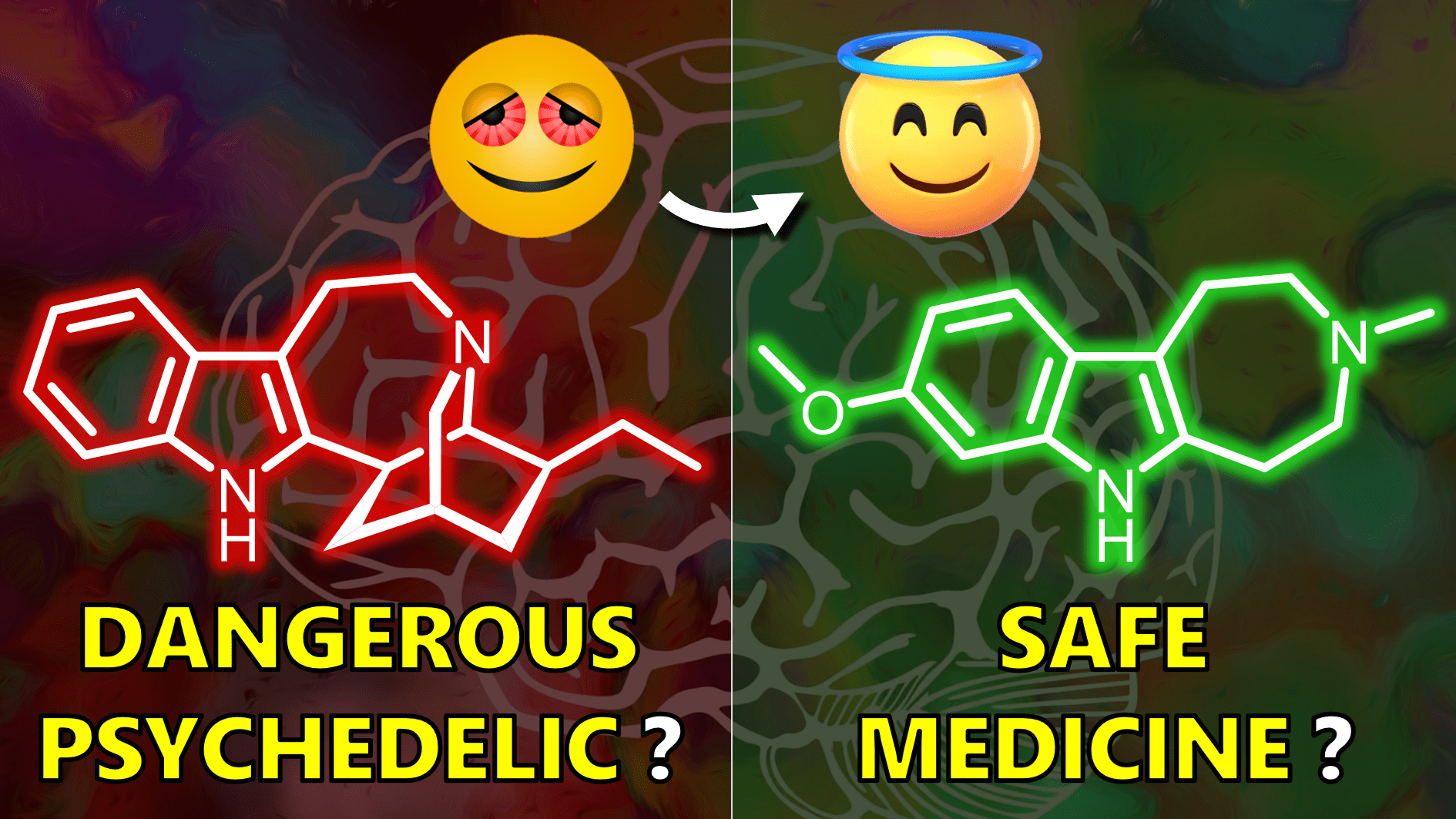
However, the clinical development of psychedelics is not as rosy as some of you might expect. There is an increasing number of case reports with severe and even deadly adverse events at high doses. Thus, scientists pursue next-generation molecules that unify life-changing efficacy with superior safety.
Join me on a journey to learn the biochemistry, therapeutic promise, and chemical synthesis of ibogaine and psychedelics-inspired medicines. How can we even know if these drugs might help, let’s say, heroin addiction?
Let’s start with the basics. What is ibogaine? Iboga comes from the bitter root bark of the Tabernanthe Iboga rainforest shrub native to West-Central Africa. Beyond traditional medicine, iboga also has a long-rooted – pun intended – importance to spiritual practices. From a Western perspective, its ritual use was first documented by French and Belgian explorers in the 19th century. Early on, high iboga doses were shown to induce powerful states of mind but also have toxic side effects. On the other hand, tribal hunters used much smaller quantities as mild stimulants. These guys were already microdosing before it was cool.
History of ibogaine and context:
Its recent history is reminiscent of other substances as it also meets what you could call the “20th century psychedelics starter pack”. Was iboga once sold commercially as a dubious extract, just like psilocybin or heroin? Check. Did the CIA run unsettling experiments as we’ve seen with LSD, in search of agents for warfare or mind control? You bet. And did the FDA classify ibogaine as a devilish Schedule 1 drug – to the dismay of people like Howard Lotsof who started to report anecdotal evidence of potent anti-addictive effects? Check. Although it was indeed abused by athletes as a doping agent, this classification dealt a blow to ibogaine investigations. While some early clinical studies were funded in the 1990s, many were terminated, and progress was quite sluggish.
Before we can understand medicinal effects, we need to take step back again from history. Iboga bark is not a pill, so it contains numerous natural products. This table from a mass spec study just shows ones over 1% – so the full list is long. Like we’ve mentioned for psilocybin, it could be that some of these phytochemicals support some sort of entourage effect of iboga. As the major alkaloid present with 2% of total bark weight, ibogaine is our primary molecule of interest. Here’s a fun fact some of you might find interesting: iboga even contains yohimbine, an alkaloid used as a dietary fat burning supplement.
Biochemical Effects of Ibogaine
In the body, ibogaine has a half life of roughly 7 hours. After ingestion, metabolization through a demethylation kicks in, catalysed by several cytochrome P450 enzymes. The resulting noribogaine with the free phenol group is more persistent. With an even longer half-life, it’s quite evident why ibogaine usually results in psychoactive effects over 24 hours, longer than most other psychedelics. Despite intensive research, we still do not understand these molecule’s mechanisms properly.
I mean, just look at this table – I’m you will agree that it seems complex! Unlike psilocybin or LSD, ibogaine does not get its hallucinogenic properties due to serotonin 2A receptor activation. This sets ibogaine apart from classical psychedelics.
Noribogaine displays sub-micromolar agonistic affinity to the kappa opiod receptor. This profile is reminiscent of the hallucinogenic natural product Salvinorin A, present in the leaves of the Mexican Salvia plant.
Noribogaine is also a strong partial agonist of the related mu opiod receptor – this is the target of classic opiod analgesics such as morphine and fentanyl, commonly used as sedatives or to treat severe pain. These agents are usually very dangerous, highly addictive substances – they are behind the extensive opioid overuse in the US. But as we will see, due to the breadth of molecular mechanisms implicated, ibogaine-derived substances could be helpful in overcoming opioid dependency.
Another key mechanism is the inhibition of NMDA-receptors, similar to drugs like ketamine and even alcohol. This might explain the dissociative effects of ibogaine shared with these other agents. NMDA receptors are glutamate-gated ion channels which drive neural processes like learning, memory, and neuroplasticity. I’m not saying that randomly taking drugs can help neurodegenerative diseases like Alzheimer’s. It’s probably counterproductive, but there is a molecular link here.
I wanted to highlight two other mechanisms – firstly, inhibition of serotonin and dopamine transporters. The 2 micro-molar Ki value for ibogaine and Noribogaine essentially match the affinity of amphetamines. Ibogaine differs from these notorious drugs of abuse as the serotonin uptake inhibition is non-competitive. This and other reasons are why ibogaine has a lower abuse potential than cocaine, another inhibitor of this class. This mechanism might drive ibogaine’s effect on mood and psychological performance.
Finally, the nicotinic acetylcholine receptor activity is perhaps most likely accounting for the anti-addictive property of ibogaine. Ibogaine is a non-competitive antagonist at several receptor subtypes, most notably the alpha 3 beta 4. This receptor is an important part of reward pathways. Blocking it can dampen dopaminergic activity and reduce self-administration of various drugs.
Beyond this, ibogaine also induces upregulation of GDNF. This is a crucial neurotrophic factor that promotes survival and plasticity of neurons, amongst others. This effect likely drives the attenuation of drug craving and use by ibogaine.
What is the Evidence for Ibogaine?
Now we’ve seen that ibogaine bridges several different classes of psychoactive substances. This translates into promising clinical efficacy, particularly in substance-use disorder. Most ibogaine studies lack rigorous clinical study design – however, there are good data in opioid and cocaine craving.
Let’s briefly check out the largest study, comparing self-reported mood and drug craving measures of opiod or cocaine dependent patients. Strikingly, after an oral dose of ibogaine, patients reported significantly lower levels of drug craving. This is measured through a questionnaire which tests patients’ confidence in ability to quit, emotionality and other factors. In addition, depressive symptoms got better as well. These improvements continued to grow after one month follow-up, indicating potentially quite durable benefits. Many other conditions have preliminary data but we will not talk about them here.
In any case, the upsides look quite promising. What about the downsides?
Ibogaine’s complex pharmacology leads to considerable potential to generate adverse effects. In rats, high doses led to degeneration of neurons. They did not replicate this in primates, so it might be species dependent and less worrisome. High doses have also led to tremors and convulsions in rats.
Much more importantly, ibogaine can also negatively affect the cardiovascular system by prolonging the QT interval of the heart. This comes from strong inhibition of hERG potassium ion channels. These channels coordinate the heart’s beating through repolarization of cardiac neuromuscular junctions. Abnormally QT intervals increase risk of developing heart rhythms problems and even sudden cardiac death.
That’s why alarming reports of life-threatening complications associated with ibogaine have been accumulating. As you can see here, even young people with no other substance use are at risk. Due to the longevity of the metabolite Noribogaine we mentioned, cardiac adverse events may also occur several days. In some cases it can even be weeks after intake of a single dose of ibogaine.
The goal is not to test ibogaine mindlessly in dozens of conditions, potentially giving patients sudden cardiac arrests. Instead, we should explore safer, ibogaine-related molecules to unlock its therapeutic potential. This research needs to elucidate the underlying mechanisms of actions. If promising, the drugs should be translated into robust, objective clinical trials in humans.
So how can we shift the balance towards better safety at similar or even better efficacy?
Ibogaine Variants: 18-Methoxy-Coronaridine
The first attempt at this is an investigational molecule is 18-MC. 18-Methoxy-coronaridine is a modified ibogaine with an additional methoxy and methyl ester group. It is synthesized differently than ibogaine, so stay tuned for the last chemistry section.
These new functionalities impact the pharmacological profile a lot. For instance, low activity at sigma sites reduces risks of neurotoxicity, while lack of activity on serotonin transporters means that 18-MC is not hallucinogenic. Interestingly, the activity at the alpha 3 beta 4 nicotinic receptor is much lower, but 18-MC is much more selective for this sub receptor than ibogaine. So, we can see that in some cases, a lower affinity is not bad if it is more targeted.
A more complicated point is also that this table only shows binding affinity – but sometimes, an equally strong affinity expressed as Ki can have a much higher IC50 value, which reflects true inhibition. Unlike ibogaine however, 18-MC does not increase GDNF expression, the additional factor believed to be critical for neuroplasticity, so their mechanisms of action are potentially distinct. Overall, 18-MC seems to have a much narrower spectrum of actions. In theory, this drives a greater therapeutic index – meaning the effective dose is much lower than a potentially harmful dose.
Regarding cardiotoxicity, 18-MC inhibits hERG channels roughly 3- to 4-times weaker than ibogaine. It’s not fully clear whether this is enough to abolish the arrythmia and cardiac adverse events – just shortly, we will check out another analog which is even better.
The clinical fate of 18-MC is not clear either. The biotech MindMed – don’t confuse it with Mind Cure – completed a Phase 1 trial last year with a solid number of patients dosed. Initial data was positive with good tolerability and no serious adverse events. They also planned a larger proof of concept trial. However, they paused it due to financial reasons with new financing and partnering required to advance the program.
Instead, the company is focusing their efforts on the development of LSD in phase 2 for anxiety and ADHD, and MDMA pre-clinically for autism spectrum disorder. As we have seen in previous videos on this channel, these drugs might be very promising in these conditions. So, who knows – strong data could resurrect MC-18. Drop me a comment if you want an update on these programs in future!
Ibogaine Variants: Tabernanthalog
In any case, fortunately there has been a promising addition to the analog roster. A 2021 paper in Nature reported the results of another quest into ibogaine analogs. Instead of throwing more groups on ibogaine like MC-18, the logic here was to simplify ibogaine’s structure, thereby improving accessibility and elucidating which features are most important for activity. In case of the ibogaine skeleton, you can envision two different simplified ring systems – one in light green and one in blue.
Out of many compounds, the most promising is “tabernanthalog“, featuring a shifted methoxy group compared to ibogaine. Before we check out why this molecule seemed to hit the sweet spot of safety and therapeutic effect – do you have an idea how to synthesize TBG?
Even though it’s quite sizeable, it requires only one step, a Fischer indole synthesis. This reaction links this substituted phenyl hydrazine with the seven-membered ketone, creating the tricyclic TBG. The mechanism is part of many undergrad courses. The initial condensation reaction forms a phenyl hydrazone which isomerizes to the enamine form, drawn here. Upon protonation, we have a sigmatropic rearrangement which creates the C-C bond. After re-aromatization, the nucleophilic amine drives C-N bond formation via the aminal – which eliminates ammonia under acidic catalysis. We will review full syntheses of ibogaine in the final section of this video – but you can already guess that making TBG in a single step with 55% yield is infinitely easier than synthesizing ibogaine from scratch.
What are Effects Of Tabernanthalog?
First up is hallucinogenicity. While appreciated by some folks, pharmaceuticals should not elicit hallucinations. Seasoned channel viewers will recognize the classic head-twitch response assay to test for hallucinogenic potential of molecules. As a positive control, we have 5-methoxy DMT which is strongly hallucinogenic, reflected in the frequent head-banging of mice. In red is IBG – this is not ibogaine but rather the simplified version with the methoxy at a constant position. Even lower than IBG was TBG in blue with essentially no hallucinogenic potential. So, these were quite some sleepy mice instead of the energetic headbangers for 5-MeO-DMT.
Remember ibogaine’s adverse cardiac effects, mediated by the hERG channel? Both simplified analogs have much weaker inhibitors than ibogaine. The simple shift of the methoxy position between IBG to TBG comes with an additional 7-fold reduction in IC50 value. The overall 150-fold weaker binding gives TBG its promise as a quote unquote “safer ibogaine”. Obviously, this is much better than the 3-4-fold difference between ibogaine and 18-MC, the first analog we talked about.
So, safety is just one part of the equation – but does TBG also bring similar positive effects? Here is where we want to review a few interesting experiments, starting with neural plasticity.
This is the ability of neural networks to change through growth or reorganization. One way to look at it is the growth of dendrites – these are a nerve cell’s extensions which propagate electrical stimuli. Exposure of rat neurons to ibogaine, IBG or TBG all lead to more dense dendritic spines.
We can distinguish if dendritic growth is due to slower break-down of spines, or instead by a higher rate of formation. Both DOI and TBG drive growth in the same manner – they accelerate the formation of new dendritic spines.
Do these psychoplastogenic effects translate into behavioral or anti-addictive effects for TBG as well? We pointed out, there are anecdotal and initial clinical reports that ibogaine can reduce alcohol or opioid use. For this analysis, you unfortunately must make mice alcoholic by giving them the option of binge drinking. After a standard 7-weeks protocol, they compared alcohol consumption between two groups. Mice who proceeded as usual (blank) and mice who received TBG prior to the drinking session. The latter group had much lower alcohol intake both during the initial part of the consumption test, as well as acutely over the following days.
The team observed similar effects when looking at heroin as another substance with high abuse potential. Here, TBG administration also led to a much lower heroin intake – seen on the left graph – and also seeking behavior – as seen on the right graph in terms of number of lever presses during their experiment.
As a last notable effect, we look at TBG’s impact on depression. We can investigate this through a “forced swim test”. “Less depressed” mice will spend more time in motion, somewhat reflecting their drive and will to live. Even though also quite controversial, all marketed antidepressants increase swimming time in the FST – so the test is legit. The researchers performed two tests – one 24 hours after administration of TBG, and a second after one week of rest. This time, the blank positive control bar is ketamine, an effective anti-depressant. During the first test, both ketamine and TBG reduced immobility. Adding ketanserin once again abolished the effect as you can see in red. Interestingly, ketamine’s effects seemed more durable, as it still led to significant lower immobility one week after administration. TBG on the other hand looked more like the vehicle control.
We discussed previously that ibogaine and its metabolite noribogaine interact with numerous biological targets. Unlike Noribogaine, TBG or IBG showed no activity at opioid receptors. Perhaps, the higher selectivity could lead to a better drug profile down the line. On the other hand, the control experiments which ketanserin already showed us that serotonin receptors are vital for TBG’s activity. A more detailed screening revealed that TBG is both an agonist of the serotonin 2A receptor – but also an antagonist to the serotonin 2B receptor. Drop a comment if you need some more explanations on how to read these charts. The interesting thing here is that many 2A agonists are also 2B agonists, which can lead to side effects like heart valve disease. 5-methoxy DMT is a key example – as you can see in the orange plot, it inhibits both receptors in a similar manner.
Outlook on Tabernanthalog
This case study was rather simple on the synthetic design part of things. Still, I think it’s really fascinating that TBG looks like ibogaine but seems to behave differently mechanistically. Although much work on translational science into humans and dosing optimization is required, TBG might be able to overcome ibogaine’s safety limitations and unlock the potential of this class of drugs.
And last, a brief note on Mindcure. This biotech company was pursuing the development of ibogaine, garnering some attention from professional and private investors such as the chap we saw during the intro. They supposedly were on track to have fully synthetic GLP supply of ibogaine ready by end of last year – but ironically, just two weeks after, reported the result of a strategic review – the discontinuation of all activities. The psychedelic pharmaceutical market can be quite volatile, and funding challenges in recent years have definitely not helped these companies either.
As a random side note, their website was dubious from the start as they didn’t get the molecular structure of ibogaine right – unless they were showing some other analog which I missed.
So – all in all, there are some promising evolutions, but progress is sluggish. I expect that we are still far away from regulatory approvals. Instead, emerging clinics in countries where ibogaine is legal will continue to draw visits from abroad. They might be helpful for some individuals as a last resort but come at a risk of sketchy medical practices and questionable patient safety.
On the positive side, we do see increased state and federal interest in ibogaine due to the opioid problem, and psychedelics more broadly. For instance, the state of Kentucky is currently considering the allocation of 42 million dollars for ibogaine research. Out of a much bigger pocket of almost a billion in settlement funds, this looks like money well spent on larger and broader clinical trials.
Organic Chemistry: Retrosynthesis of Ibogaine
Now we will discuss not one or two, but three different approaches towards the ibogaine framework – as well as the synthesis of 18-MC.
From a retrosynthetic perspective, given the high complexity of the ibogaine scaffold, there are various disconnections that lead to sensible synthetic approaches. A quite straight-forward option uses a Fischer indole synthesis with a simpler ketone. However, most approaches include the indole from the start to guide the synthesis. One method we will review uses transition metal catalysis, while others harness the electrophilic reactivity of the indole. The gram-scale synthesis we will look at uses yet another approach based on nucleophilic substitution at the aliphatic nitrogen. Note that these syntheses focus on ibogamine – which is ibogaine lacking the methoxy group – because it is not a controlled substance.
First total synthesis of ibogamine (Büchi)
Let’s start with the pioneering first total synthesis of ibogamine, published by Büchi in 1965. It started from this pyridinium salt, which was reduced to the diene. This prepared the Diels-Alder reaction with methyl vinyl ketone which nicely builds the iso-quinuclidine core of ibogamine. Next, some redox and functional group interconversions produce the following intermediate. There are quite a few things going on, so we won’t go into it in detail – but this is a nice exercise for motivated viewers. Now, hydrogenation of the benzyl protecting group released the nucleophilic amine, which was coupled to this indole, bearing an acyl chloride.
The next task was to create the central C-C bond to connect the rings. This was achieved in two steps – under acidic conditions, the indole electrophilically attacks the adjacent ketone, and the resulting adduct was reduced with Zinc and acid. A few more steps were needed to get all ducks in order. First, a reduction removed the acetate protecting group and partially reduced the amide. To get to the fully aliphatic amine, they had to take a detour due to the reactivity of the system. Elimination of the hydroxy group with base temporarily cleaved the isoquinuclidine ring.
The link was regenerated by reduction with Zinc, which is mediated through the unsaturated ketone. Finally, a Wolff-Kishner reduction with hydrazine removed the ketone and gave ibogamine. All in all, not bad for 1965, but can we make this more efficient?
Modern Synthesis of Ibogaine
That’s exactly what the second synthesis is about. It starts off with a Palladium-catalysed heteroannulation to forge a highly functionalized indole. You will note that the ring contains a methoxy group, so this is indeed a synthesis of proper ibogaine. Next, two iodide groups were introduced – first at the indole by treatment with electrophilic NIS, and second at the aliphatic position by deprotection and SN2.
This reactive iodide should remind you of the acyl chloride we saw in the 1965 synthesis – again, it allows the introduction of the isoquinuclidine through another substitution. This can be made in a similar fashion as we saw in the 1965 synthesis as well – so these syntheses have some parallels. Interestingly, the authors noted that when using potassium carbonate as a base, there was a significant degree of intramolecular cyclization to the cyclopropane. This could be suppressed by using caesium carbonate instead. Finally, the indole and isoquinuclidine were bridged through a reductive Heck coupling, which after elimination already gave our product ibogaine. This synthesis is definitely more efficient and direct – but is there anything cooler?
Large-Scale Synthesis of Ibogaine
Three time’s a charm today. Quite recently, a paper described the gram-scale synthesis of ibogamine in just nine steps and an impressive 24% overall yield. Most notably, this approach would provide ample material to pursue even more synthetic analogs, particularly ones than are more complex than TBG.
The synthesis started from this vinylogous ester. First, a simple silylation protected the primary alcohol. Then, a Stork-Danheiser transposition with the Grignard reagent formed an enone, now bearing the ethyl group present in ibogamine. Through a Mitsunobu coupling, this fragment was linked to an indole bearing an amine. So, this contrasts with the previous syntheses where we had an electrophilic indole partner, this one is nucleophilic.
The ketone was then selectively reduced under Luche conditions and acetylated to create an activated allylic system. This set the stage for pivotal Friedel-Crafts reaction – which as we’ve seen can be mediated by Bronsted or Lewis acids. After some screening, the chemists found decent conditions with catalytic camphorsulfuric acid and lithium perchlorate at a 5M concentration. This meant that the scale-up would require massive amounts of perchlorate. Initial optimization attempts were not fruitful, as they either had to keep the quantity of perchlorate or dilute the mixture to unpractical 0.001M. Ultimately, after trying enough conditions, they got good conditions employing only 2 equivalents of magnesium perchlorate.
Finally, the only thing left was the formation of the C-N bond on the isoquinuclidine – you might remember that we highlighted this as a key retrosynthetic disconnection at the start. First, the double bond which remained from the enone was hydroborated and activated as a mesylate. And last, the nitrogen was deprotected which triggered the intramolecular SN2 reaction to give ibogamine. The whole exercise delivered 1.1g of pure ibogamine in one go.
Synthesis of 18-Methoxycoronaridine
To conclude our journey, let’s check out the initial synthesis of 18-MC starting from tryptamine – as you can imagine, it will be more complex than the ibogaine syntheses given the two additional functional groups.
The route starts off with a condensation of tryptamine to the ketone of this fragment. If you are still awake, you will notice that this ester group ultimately ends up in 18-MC. Due to the alpha-chloro group, the product can undergo an intramolecular substitution, creating a transient aziridine, and rearrange to the expanded 7-membered ring. Then, the double bond can be reduced, and the nitrogen protected.
The unique thing about this system is that upon heating, a retro 1-4 addition can fragment the ring, liberating the free amine and the alpha, beta unsaturated ester. Why is this helpful? Well, by condensing the amine with this aldehyde, a dearomative Diels-Alder reaction can be triggered. As a side note – that it really matters down the line – note that because the intermediary (e)-enamine was preferred, the product has the substituents in trans positions. Also, the newly introduced piece features the methoxy group we want to have in 18-MC.
So now, it’s all about linking up the rings properly. First, a conjugate reduction regenerates the aromatic indole and releases the quaternary carbon. Next, a hydrogenation unveils the amine, which upon deprotection of the aldehyde forms yet another cyclic enamine.
Redrawing this structure, we realize that just a final ring closure is needed to create 18-MC. This was achieved by simply heating in toluene because the additional ester group proved quite handy. It’s likely that an intramolecular proton shift facilitates formation of an anion and iminium, which can react to create the quaternary centre and deliver 18-MC. This first synthesis from 2001 did seem a bit random – and there are more efficient routes that are more analogous to ibogamine – but I thought it was nice that they used the additional ester to guide the approach.
This concludes our ibogaine journey. I hope you learned several new interdisciplinary science facts today!
References on Ibogaine, Ibogamine, Tabernanthalog & 18-MC
DARK Classics in Chemical Neuroscience: Ibogaine | ACS Chem. Neurosci. 2018, 9, 2475
Phytochemical characterization of Tabernanthe iboga root bark and its effects on dysfunctional metabolism and cognitive performance in high-fat-fed C57BL/6J mice
A systematic literature review of clinical trials and therapeutic applications of ibogaine | Journal of Substance Abuse Treatment 2022, 138, 108717
Ibogaine Detoxification Transitions Opioid and Cocaine Abusers Between Dependence and Abstinence: Clinical Observations and Treatment Outcomes| Front. Pharmacol., Sec. Neuropharmacology 2018, 9: 00529
The Anti-Addiction Drug Ibogaine and the Heart: A Delicate Relation | Molecules 2015, 20, 2208
18-Methoxycoronaridine (18-MC) and Ibogaine: Comparison of Antiaddictive Efficacy, Toxicity, and Mechanisms of Action Annals of New York Academy of Sciences 2000, 914, 369
A non-hallucinogenic psychedelic analogue with therapeutic potential | Nature 2021, 589, 474
The Total Synthesis of (±)-Ibogamine and of (±)-Epiibogamine | JACS 1965, 87, 2073
Total synthesis of ibogaine, epiibogaine and their analogues | Tetrahedron 2012, 68, 7155
Gram-Scale Total Synthesis of (±)-Ibogamine | Org Lett 2023, 25, 4567
Chemical Synthesis and Biological Evaluation of 18-Methoxycoronaridine (18-MC) as a Potential Anti-addictive Agent | Current Med Chem CNS Agents 2001, 1, 113